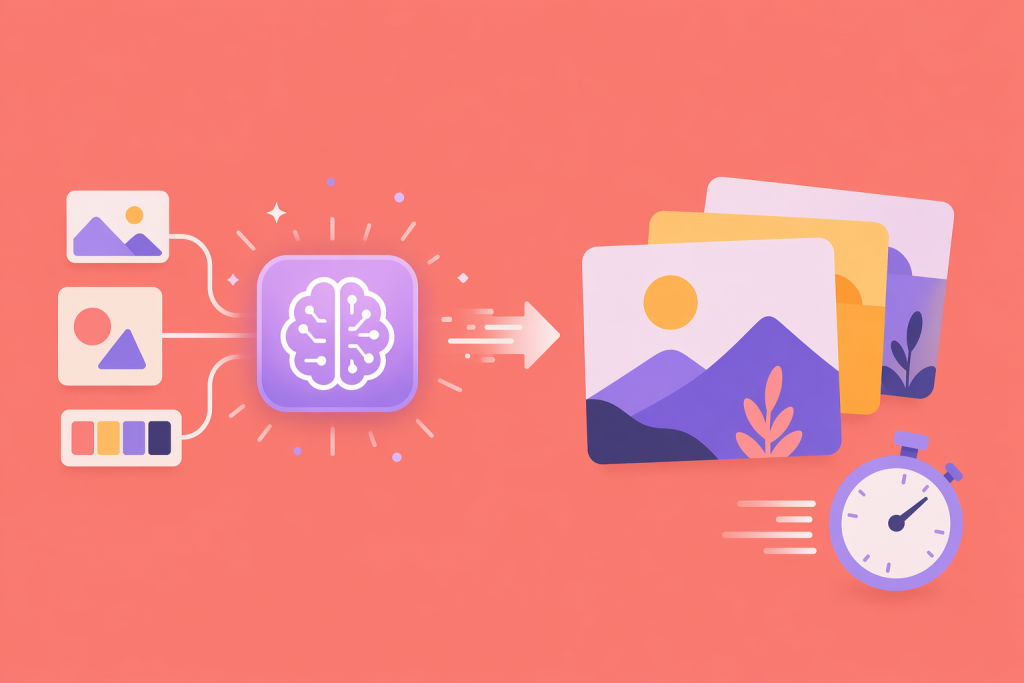
Previously, creating any kind of visual content for a business usually turned into a time-stretched process with budgets and the search for designers. Banners for a website or social media visuals became tasks that kept getting postponed. Now the situation is different: artificial intelligence produces ready content in a matter of minutes. Design has stopped being a “bottleneck” that slows down a project launch.
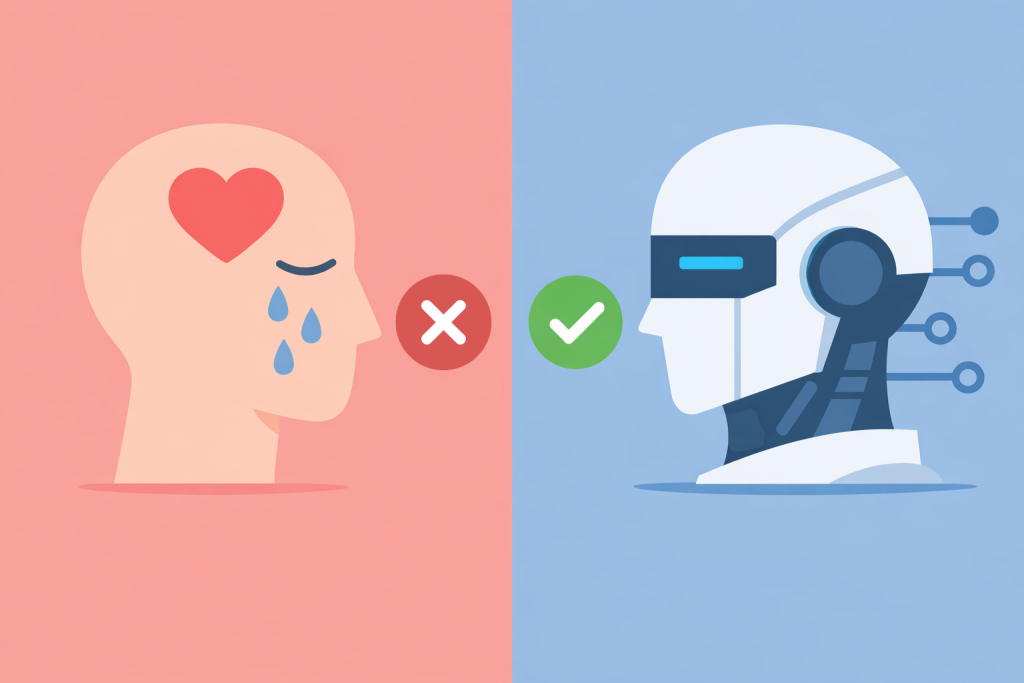
Not so long ago, the main measure of a neural network’s quality was considered its ability to imitate a human. Polite courtesies, extended introductions, and soft phrasing created the illusion of a live interlocutor. At the stage of getting familiar with the technology, this helped remove the barrier of distrust, but over time the priorities shifted.
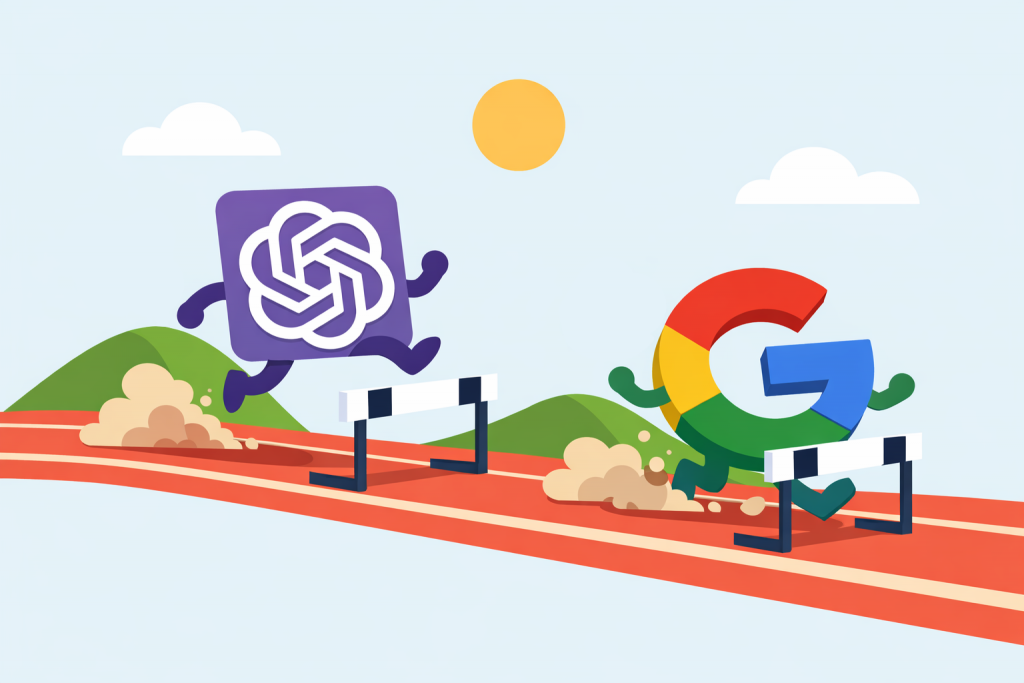
Competition and scaling as driving forces for the development of artificial intelligence
Just a few years ago, artificial intelligence was perceived as an experimental technology available mainly to large corporations, research laboratories, or a narrow circle of developers. AI was associated with research, complex algorithms, and distant prospects. Today, the situation has changed dramatically. Artificial intelligence has become a mass product used daily by millions of people around the world, often without even thinking about it. This shift was not accidental — it is the result of a long-term strategy pursued by the largest technology companies.
The development of AI from basic tools to full-fledged intelligent assistants
When ChatGPT appeared at the end of 2022, it was perceived more as a technological experiment. A simple chat capable of answering questions, explaining terms, and writing texts quickly attracted the attention of developers, copywriters, and technical specialists. But even then it was clear that this was only the first step. In a relatively short time, ChatGPT went from demonstrating the capabilities of artificial intelligence to becoming a full-fledged digital tool used by millions of people in their daily work.
Collaboration that changes the future of artificial intelligence
On October 6, 2025, AMD announced a strategic partnership with OpenAI — and the market literally exploded. Within a single day, AMD’s stock soared by more than 25%, marking one of the most impressive surges in the company’s history. Investors called it a “moment of truth” for the AI industry, as for the first time in years, Nvidia gained a real competitor.
This partnership is not just another contract in the tech world. It could become a turning point for the entire AI infrastructure — from large data centers to VPS platforms that host business applications, analytics, and automation. AMD and OpenAI have set a course toward building a more powerful, open, and accessible ecosystem for artificial intelligence — a foundation for the new digital era.
Verifying information and critical thinking when using ChatGPT
ChatGPT is a powerful tool that generates text-based answers from a vast dataset, but it is not a database of facts. It produces plausibly sounding responses (answers that seem convincing and logical, even if they may be inaccurate or fabricated) by relying on language patterns. This means that even when answers sound confident, they may still be false or incomplete. Reviews show that the model can make mistakes in simple questions and continue making them even after corrections. This means its conclusions should be treated as suggestions rather than absolute truth. That is why it is important for users to follow safety rules and verify the information.
Top tips for creating effective prompts to get quality answers from ChatGPT
Today, let’s talk about a well-known powerful tool that can generate text, translate languages, write various types of content, and provide informative answers to your questions. Yes, we’re talking about Chat GPT. However, like any tool, it requires skillful use to get the best results.
In this article, we will share with you some key recommendations for prompts that will help you receive the most meaningful and useful answers from Chat GPT.
Features of the new version of ChatGPT 4o and its application in various fields
In just the past year, we’ve seen how artificial intelligence is constantly evolving, surprising us with new capabilities. Recently, the world learned about the updated version of the chatbot, Chat GPT 4, now known as GPT 4o, which promises to revolutionize our interaction with computers.
So, what’s new about it? Let’s dive into today’s article.