

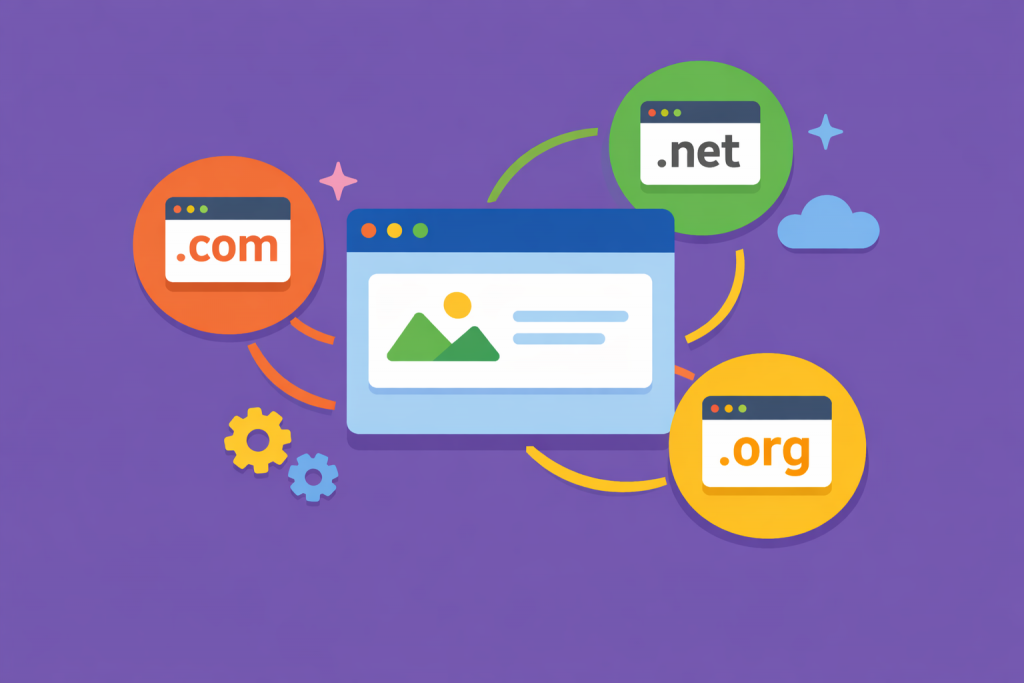
When a website is launched, the domain is usually chosen quickly. The name is checked for availability, registered – and the matter seems closed. At the beginning that is usually enough. But over time situations appear where a single domain name is no longer sufficient. Especially if the project starts receiving steady traffic, works with advertising, or begins entering new markets. In such cases several domains for one project stop looking unnecessary.
This is not about collecting addresses. In most situations the reason is much more practical: control over the name, convenience for users, or preparation for the future development of the service.
Protecting the project name
As soon as a site name begins to appear in advertising, search results, or social networks, another issue tends to surface. Similar domains may be registered by unrelated people. Sometimes it is simply coincidence. Sometimes it is an attempt to benefit from someone else’s growing visibility.
Most often this concerns the same name in other domain zones or small variations in spelling. For example, someone adds a hyphen, chooses a different domain zone, or replaces a single letter. Users confuse such addresses easily, especially when typing a site from memory or hearing it somewhere.
For that reason project owners often register several domains with the same name. The difference is only the zone – for example .com, .net or national domains. After that these addresses are simply redirected to the main website.
By the way, the domain zone itself is the part of the address after the dot. Quite often it becomes the source of confusion when someone enters the address not entirely accurately.
Working with different countries
When a site begins operating across several markets, one domain may also become insufficient. A company may launch a separate version of the website for another country or language audience.
In such situations separate domains are often used. One works as the main domain, another serves the local version. For the user this feels natural: the domain immediately hints that the site is intended for their region or language.
Technically this can work in different ways. Sometimes the domain leads to a separate version of the site. Sometimes it leads to the same resource but with automatic language detection. For a visitor the difference is almost invisible, yet from a trust perspective it tends to work quite well.
Additional domains for advertising
In marketing, domains are sometimes used as a separate tool. This is especially common in advertising campaigns.
Short thematic addresses are convenient for banners, offline advertising or promotional pages. Such domains are easier to remember than long links leading to internal sections of a website.
Usually they simply direct visitors to a specific section of the main resource. For a user it looks like an ordinary transition, but for marketing it also becomes a way to understand where the traffic actually came from.
Domains reserved for the future
Sometimes domains are registered with the future in mind. Especially when there is a sense that the project may expand.
Today it might be a single website. Tomorrow a separate service appears, a new product, or an entirely different direction. If the relevant domain has already been registered, there is no need to search for a compromise name or invent complicated alternatives.
Because of this, startups often reserve several related domains from the start. Not all of them are used immediately. But sometimes a year or two later they turn out to be very useful.
When multiple domains do not make sense
At the same time buying many domains simply “just in case” is rarely the best idea. For a small website or a personal blog one domain usually covers all needs.
If additional addresses have no clear scenario of use, they quickly become unnecessary expenses. They need to be renewed, monitored, and sometimes configured with redirects.
Domains as part of a strategy
Several domains for one project make sense when it is clear why they are needed. Sometimes it is about protecting the name. Sometimes it is about convenience for different audiences or advertising campaigns. Sometimes it is simply preparation for the possibility that the project may look different in a few years.
In such cases a domain stops being just a technical formality required to launch a website. It becomes a separate digital asset that is managed in advance. And that is when several addresses actually begin working for the benefit of the project.
Leave a Reply