
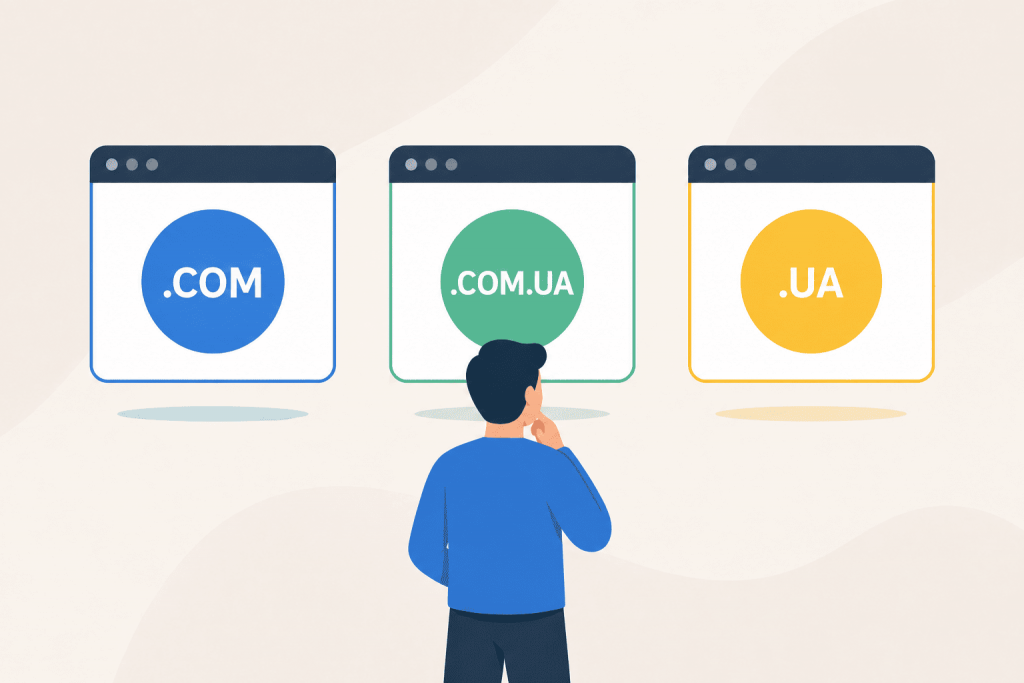
When a website is almost ready, choosing a domain is often left until the last moment. It seems that the main thing is to find an available name. But then the question appears: should you take .COM, .COM.UA or .UA?

When a website is almost ready, choosing a domain is often left until the last moment. It seems that the main thing is to find an available name. But then the question appears: should you take .COM, .COM.UA or .UA?
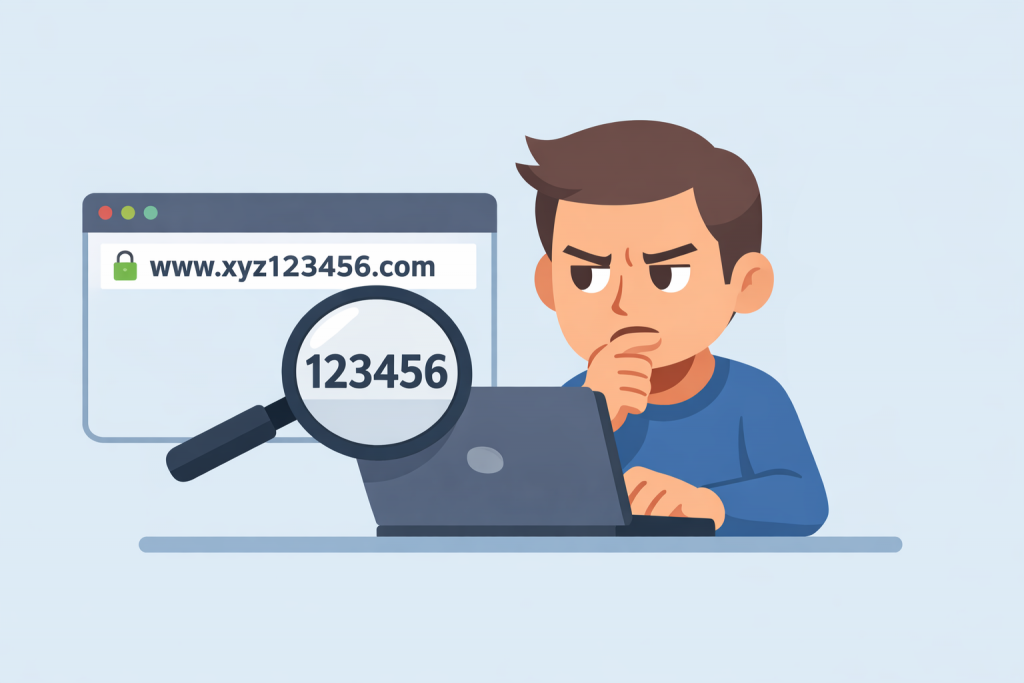
Choosing a domain name may seem like a simple step when launching a website, but in practice the domain creates the first impression of a project. A user sees the address before opening the site and already at this stage subconsciously decides whether the resource can be trusted. One of the most common reasons for a cautious reaction is the presence of numbers in the domain name. Even if the website works properly and the company is legitimate, a domain with numbers is often perceived as less reliable.

When choosing a domain name, many website owners automatically focus on international zones such as .com or .net. They seem universal, familiar, and “safe.” However, in practice, a national domain often works more effectively, especially if the website is aimed at a specific country, its audience, and its market. In such cases, the domain zone becomes not just an address, but a tool for building trust, recognition, and even better business results.
Launching a website often begins with choosing a domain name. The domain becomes the first point of contact between a business and a user, the foundation of the brand, and the address by which the site is found in search results, advertising, and recommendations. At this stage, many owners treat the domain as a technical formality and do not give it enough attention. Mistakes made when choosing a domain rarely appear immediately, but over time they begin to affect trust, recognition, and even financial results. The most difficult part is that after a website is launched, changing the domain with no losses is almost impossible.
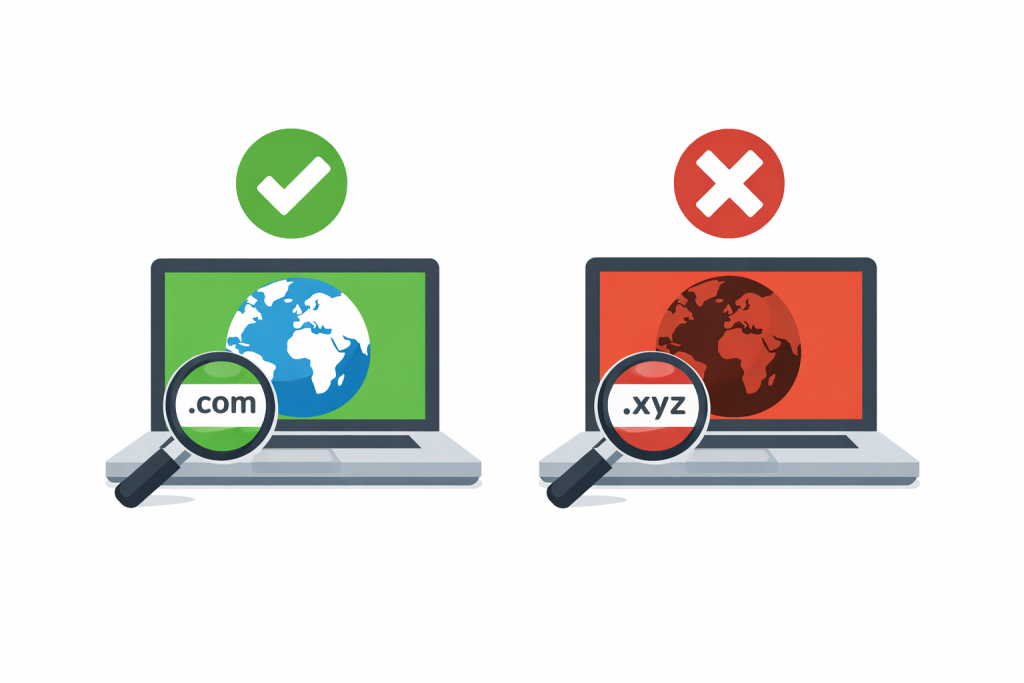
When getting acquainted with a website, users usually do not analyze it consciously — a decision is formed within seconds. Design, name, loading speed, and even the website address work together to create a first impression. That is why the domain zone, meaning the part of the address after the dot, can significantly affect the level of trust. For many people, it carries hidden signals about reliability, geography, business seriousness, or even potential risks.

In the early stages of business development, a domain name is often perceived as a formality. The main goal is to quickly launch a website, receive inquiries, or sell a product. Entrepreneurs choose what is available, inexpensive, or simply sounds appealing. However, over time, the domain itself can become a factor that quietly yet noticeably restrains business scaling. This does not happen immediately, but rather when a company moves beyond its initial audience, region, or operating model.
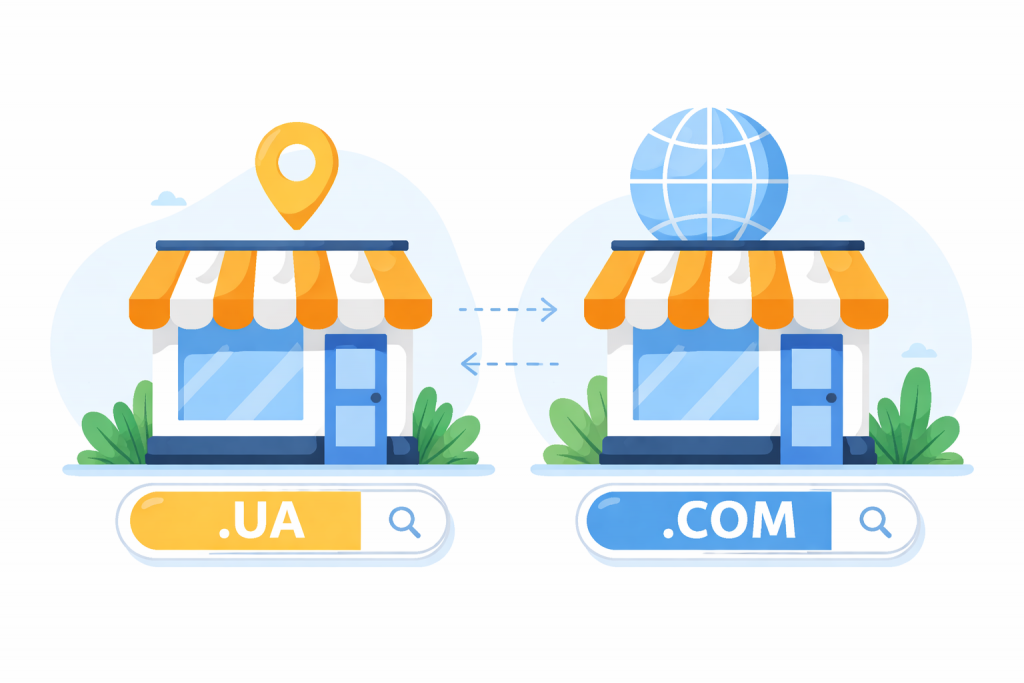
For many entrepreneurs, a domain is simply a technical website address that needs to be registered quickly in order to start operating. Most often, the choice falls on the universal .COM zone, as it is familiar to users worldwide. However, for local businesses in Ukraine, this approach is not always optimal. The .UA domain zone, as well as the related .COM.UA, often work more effectively because they do more than just indicate a website address — they shape the correct perception of the brand, its scale, and the market it is focused on.

In today’s digital environment, a domain name increasingly goes beyond serving as a purely technical website address. It becomes part of brand communication and often acts as the first advertising touchpoint with a user. That is why creative domains are gaining practical importance rather than remaining a purely aesthetic experiment. This is not about abstract “originality,” but about concrete approaches that help a brand stand out among dozens of similar names.

Domain liquidity is one of the key indicators that shows how easily and profitably a domain can be sold or used to build a recognizable online brand. Although a domain may look like a simple digital address at first glance, its value is shaped by market rules: the shorter, clearer, and more popular the name, the higher the chance that it will remain valuable for years. Assessing liquidity before purchasing helps avoid unnecessary expenses, make the right investment, and choose a truly promising name. To understand what influences liquidity, it is important to explore the key factors that form a domain’s market value and the methods specialists use to evaluate such assets.
Choosing a domain name may seem like a simple step: you come up with a name, check availability, register it — and start building your brand. But in reality, a domain is the foundation of your online presence, and its quality affects not only recognition but also security. A poorly chosen domain name can lead to your website being blocked by providers, government regulators, or global corporations, which threatens your reputation and traffic. To avoid these risks, it’s important to understand why certain domains get restricted and how to assess their safety in advance.