
Month: January 2026 Page 1 of 2

How Different Browsers Verify SSL Certificates in Different Ways

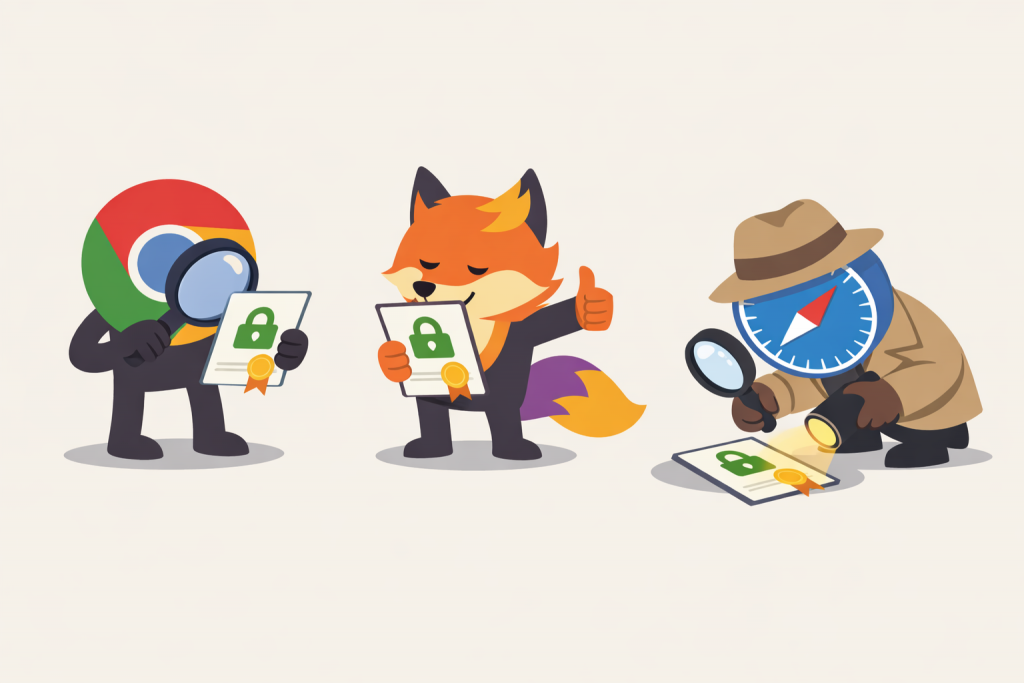
Three characters in the form of Chrome, Firefox, and Safari browsers are checking an SSL certificate: one examines it through a magnifying glass, the second evaluates it favorably, and the third inspects the document in detail with a flashlight.
Different browser approaches to assessing the security of an encrypted connection

When a user opens a website and sees a padlock icon in the browser, it is perceived as a simple and clear signal of security. However, behind this symbol lies a complex SSL certificate verification mechanism that is triggered every time a secure connection is established. It is important to understand that different browsers may implement this verification differently. While the basic security principles are shared, specific trust policies and responses to errors vary, and this often explains why the same website behaves differently in different browsers.

Why SPF, DKIM, and DMARC Are More Important Than Complex Passwords

An electronic envelope with an @ symbol in the center, next to it is an access key, a shield with a checkmark, and a document with settings, symbolizing email protection and verification.
Trust in email is not built by passwords, but by technical verification and authentication mechanisms.

When it comes to email security, most users primarily think about complex passwords. Longer ones, with numbers, symbols, and regular changes. This makes sense, because a password protects access to a mailbox. However, in reality, the password is rarely the main cause of email-related problems. Even a perfect password will not prevent attackers from sending emails on behalf of your domain, spoofing the sender, or reducing trust in your entire email infrastructure. This is where SPF, DKIM, and DMARC come to the forefront — technologies without which modern email simply cannot be considered secure.

When a domain zone affects the level of trust

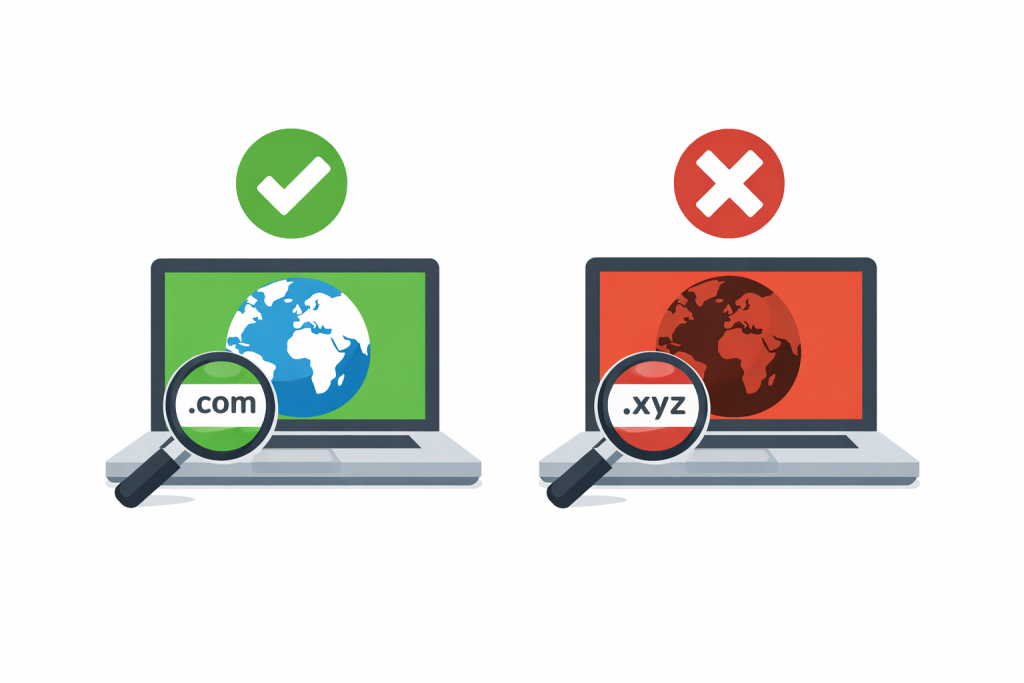
Two laptops side by side: one showing the .com domain with a green check mark and globe, the other showing the .xyz domain with a red check mark, both highlighted with a magnifying glass.
Perception of the domain zone as a factor of trust in an online project

When getting acquainted with a website, users usually do not analyze it consciously — a decision is formed within seconds. Design, name, loading speed, and even the website address work together to create a first impression. That is why the domain zone, meaning the part of the address after the dot, can significantly affect the level of trust. For many people, it carries hidden signals about reliability, geography, business seriousness, or even potential risks.

How the World Entered the Era of Computing Resource Shortages

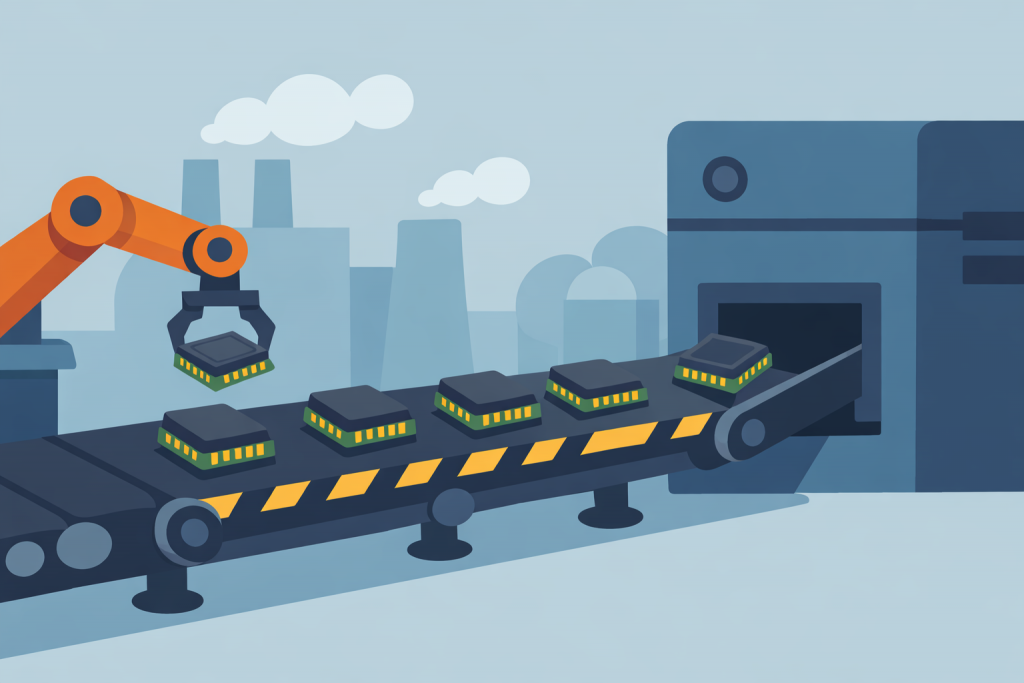
An industrial line with a conveyor on which a robot manipulator moves microchips undergoing processing at a semiconductor manufacturing plant.
Computing resources as a new strategic asset of the modern economy

Global digital services are growing faster than ever before. The volume of data, the scale of computations, and the complexity of algorithms are increasing so rapidly that infrastructure can no longer keep up with these changes. What not long ago seemed like a matter of optimization or proper server configuration has now turned into a systemic problem. The world is gradually entering an era of computing resource shortages, where processing power, memory, and bandwidth are becoming insufficient on a global scale.

Why Virtual Hosting Handles the Human Factor Better

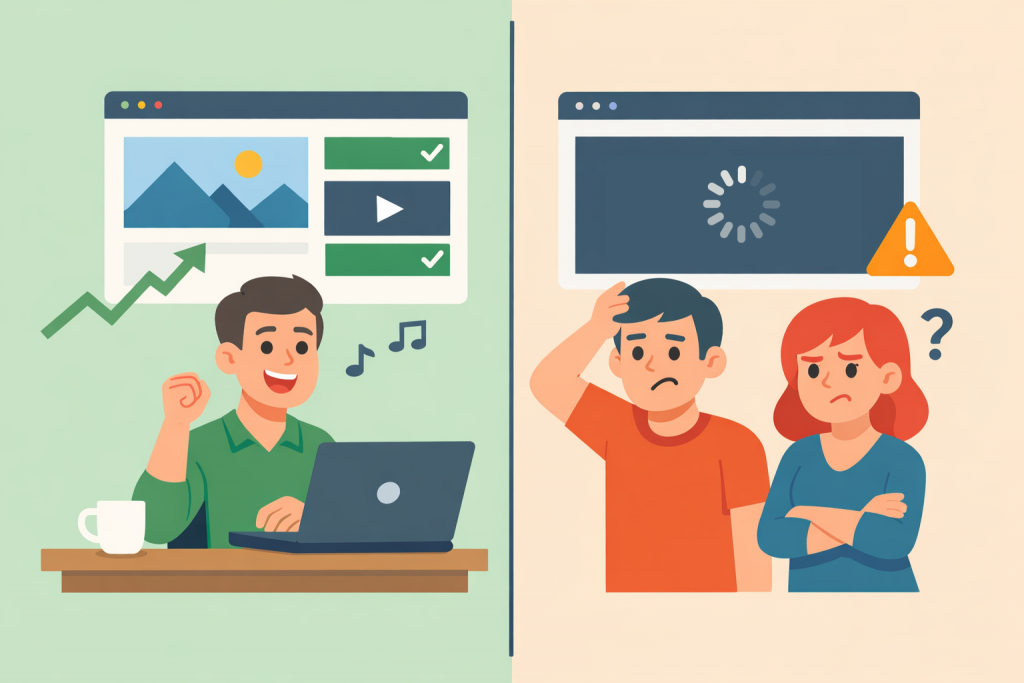
A person is sitting relaxed at a laptop with a cup of coffee, and nearby are servers in the cloud, symbolizing the automated operation of hosting without constant human intervention.
Automation as a key factor in the stability of online projects

In any technical system, the human factor remains one of the main causes of failures. Even the most experienced specialists can make mistakes, and haste or fatigue can lead to incorrect settings, file deletion, or faulty updates. For website owners, this means the risk of downtime, data loss, or improper operation of the resource. That is why virtual hosting often turns out to be more resilient to such situations than it may seem at first glance.

Space as a New Environment for Mass Technologies

Several satellites move in orbits around the Earth in outer space, transmitting signals against the backdrop of stars, the Moon, and planets.
Expanding technological infrastructure beyond the planet

Not so long ago, space remained a domain for scientific experiments, individual missions, and highly specialized research. The number of satellites in orbit was limited, and their tasks were narrowly focused. Today, the situation is changing fundamentally. Space is gradually turning into a full-fledged environment for mass technologies that affect everyday life on Earth, even if this influence is not always immediately noticeable.

The First Email Services and the Birth of Digital Correspondence

Two people sitting at computers of different generations in different rooms are exchanging an email message, indicated by a letter icon between them.
The beginning of the era of digital communication at a distance

The idea of sending messages over a distance appeared long before computers and the internet. For centuries, people relied on paper letters, couriers, and postal stations. However, with the emergence of computer networks in the second half of the twentieth century, correspondence began to shift into digital form. This period marked the birth of email — a service that later became the foundation of modern digital communication.

The End of the Era of Voice Assistants in the Traditional Sense

A person exits a smartphone with a data box under the icon of the old voice assistant, while another figure stands on the screen with a new AI symbol, representing modern artificial intelligence.
Changing approaches to human interaction with digital assistants

Apple has officially confirmed the integration of Google’s Gemini as the artificial intelligence powering the iPhone. In practice, this means that instead of continuing to develop its own voice assistant, Siri, the company is placing its bet on a third-party, next-generation AI model. For many users, this news may seem like just another ecosystem update, but in reality it points to a much deeper process — the end of the era of classic voice assistants as we have known them.

When a Domain Hinders Business Scaling

An entrepreneur climbs up a mountainside to the top with a flag, but is stopped by a large ball with the word DOMAIN written on it, chained to his leg.
When digital limitations start to hinder a company’s growth

In the early stages of business development, a domain name is often perceived as a formality. The main goal is to quickly launch a website, receive inquiries, or sell a product. Entrepreneurs choose what is available, inexpensive, or simply sounds appealing. However, over time, the domain itself can become a factor that quietly yet noticeably restrains business scaling. This does not happen immediately, but rather when a company moves beyond its initial audience, region, or operating model.

How Major Technology Companies Turn Artificial Intelligence into a Mass Product

OpenAI and Google logos in the form of characters running along an obstacle course, overcoming barriers on the way, against a backdrop of hills and sky.
Competition and scaling as driving forces for the development of artificial intelligence

Just a few years ago, artificial intelligence was perceived as an experimental technology available mainly to large corporations, research laboratories, or a narrow circle of developers. AI was associated with research, complex algorithms, and distant prospects. Today, the situation has changed dramatically. Artificial intelligence has become a mass product used daily by millions of people around the world, often without even thinking about it. This shift was not accidental — it is the result of a long-term strategy pursued by the largest technology companies.

Page 1 of 2