
Tag: Domain Registration Page 1 of 2

Is it worth registering a domain for several years at once

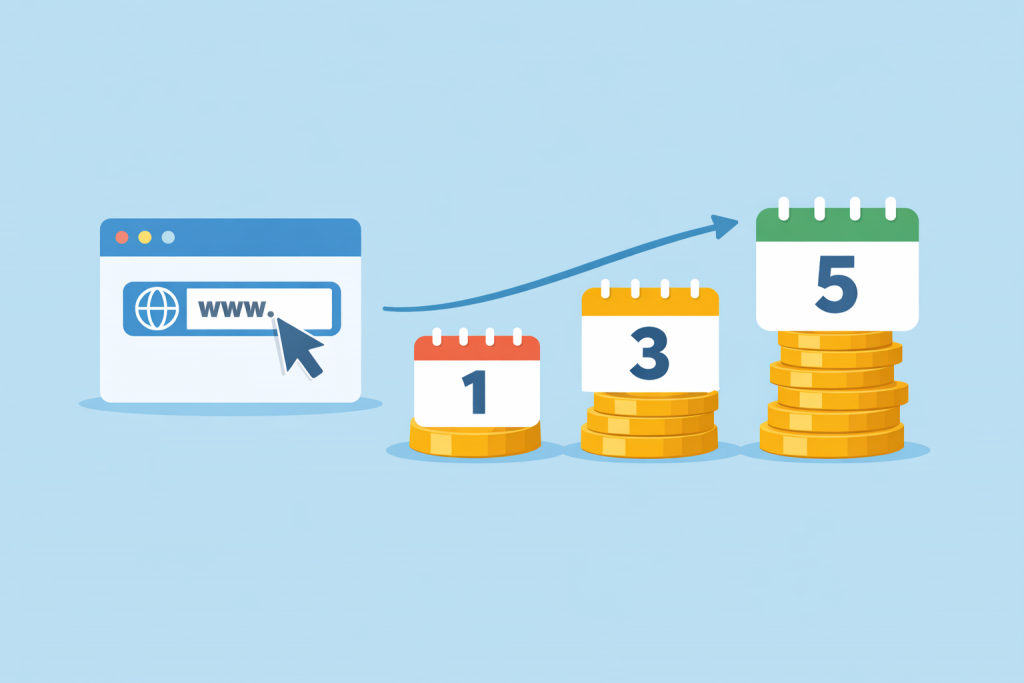
Web address with cursor, arrow and calendars with one, three and five years on stacks of coins.
How the approach to a domain changes when planning goes beyond one year

When a new website is launched, the domain question is usually resolved quickly. A name is chosen, availability is checked, payment is made for a year – and attention shifts to design, content, or advertising. The registration term rarely becomes a focus. Until a renewal is missed or the price changes.
When is it worth buying multiple domains for one project

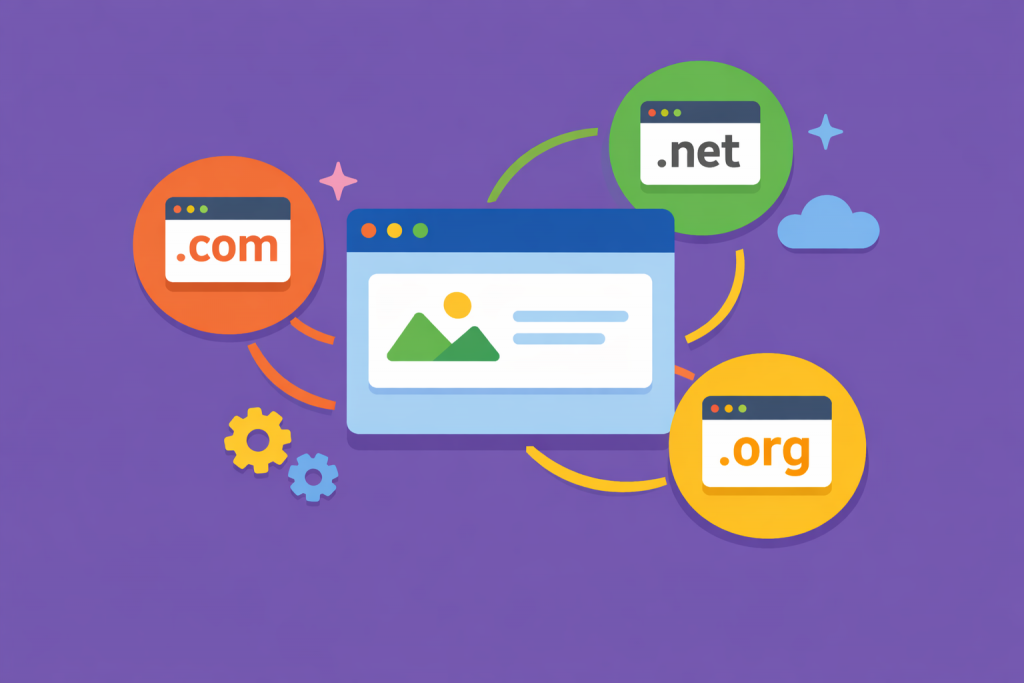
A website window connected to .com, .net, and .org domains, showing multiple domains being linked to a single project.
Використання кількох доменних зон для одного сайту або сервісу

When a website is launched, the domain is usually chosen quickly. The name is checked for availability, registered – and the matter seems closed. At the beginning that is usually enough. But over time situations appear where a single domain name is no longer sufficient. Especially if the project starts receiving steady traffic, works with advertising, or begins entering new markets. In such cases several domains for one project stop looking unnecessary.

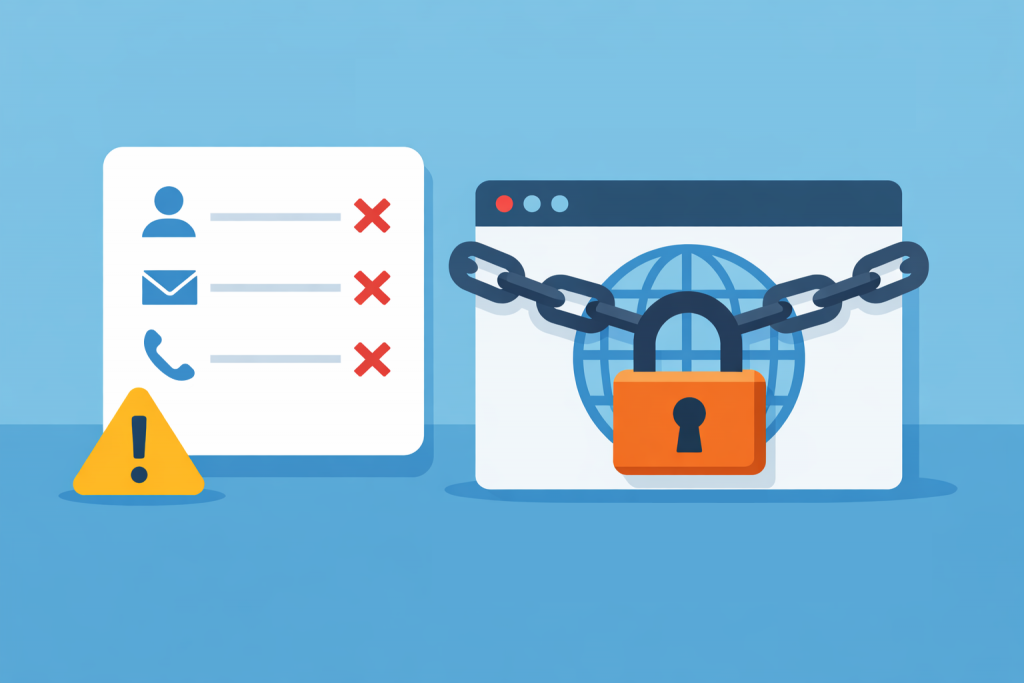
How an Error in Contact Details Can Block a Domain

When a domain is registered, the form with contact details usually gets very little attention. The name is checked, the payment goes through – the main thing is that the domain starts working. Fields with the name, phone number or email are often filled in quickly. Sometimes the data is even copied from old accounts or internal documents. The problem shows up later.

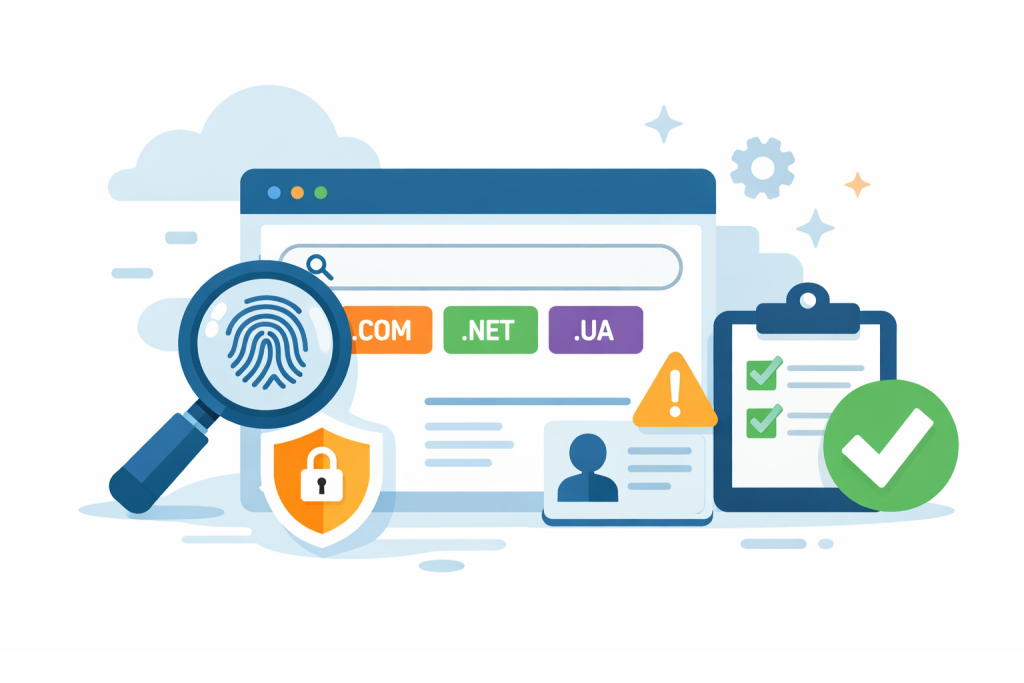
Which domain zones require additional verification during registration

Illustration with a browser, .com, .net and .ua domain zones, verification, security and warning icons symbolizing additional verification during domain registration.
Some domain zones have increased verification requirements

In practice, choosing a domain often runs into the technical regulations of registries, which users usually discover only after payment. Automatic activation within five minutes is the standard for mass-market zones such as .COM or .NET, but there are many extensions where manual moderation or document verification is an integral part of the process. Registries introduce these barriers not to create difficulties, but to filter out cybersquatters, fake organizations, and protect the reputation of the zone itself.

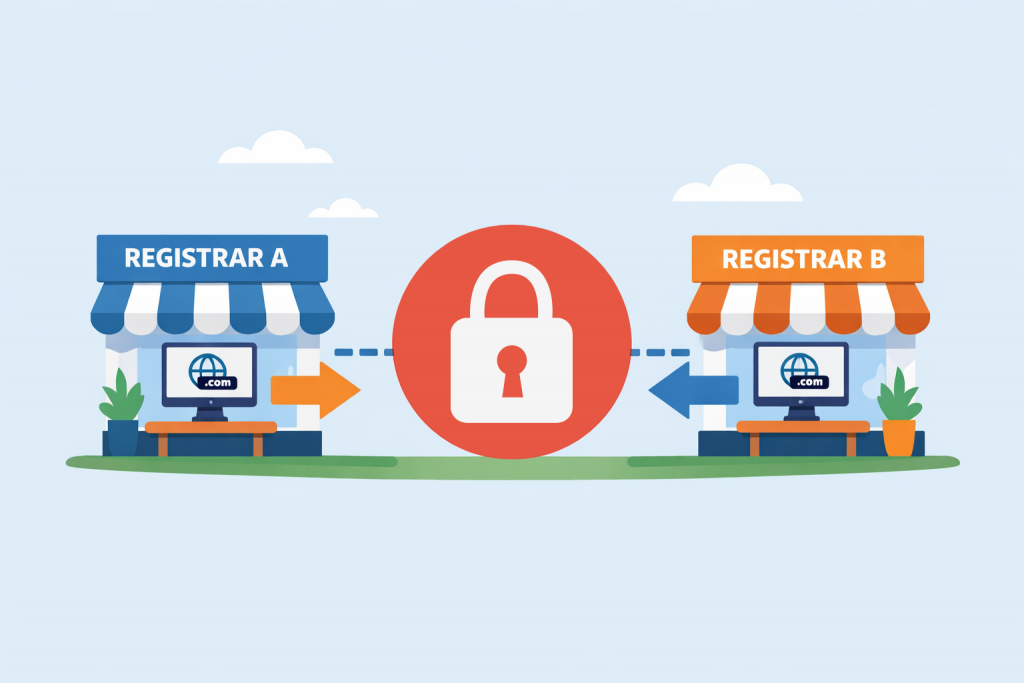
Why Domain Transfer Is Not Possible Immediately After Registration

Two domain registrars, labeled Registrar A and Registrar B, between which the domain transfer directions are shown, and in the center is a lock symbolizing the temporary blocking of the transfer after registration.
After registration, the domain remains blocked for transfer for some time.

Practice shows that an attempt to change the registrar during the first week after purchasing a name is one of the most common reasons for contacting support. The owner sees a paid invoice, an active status in the control panel and logically assumes the domain is their property, something they can manage however they wish. Yet a technical refusal to transfer at this stage is not the whim of a particular company but a strict rule defined at the protocol level.

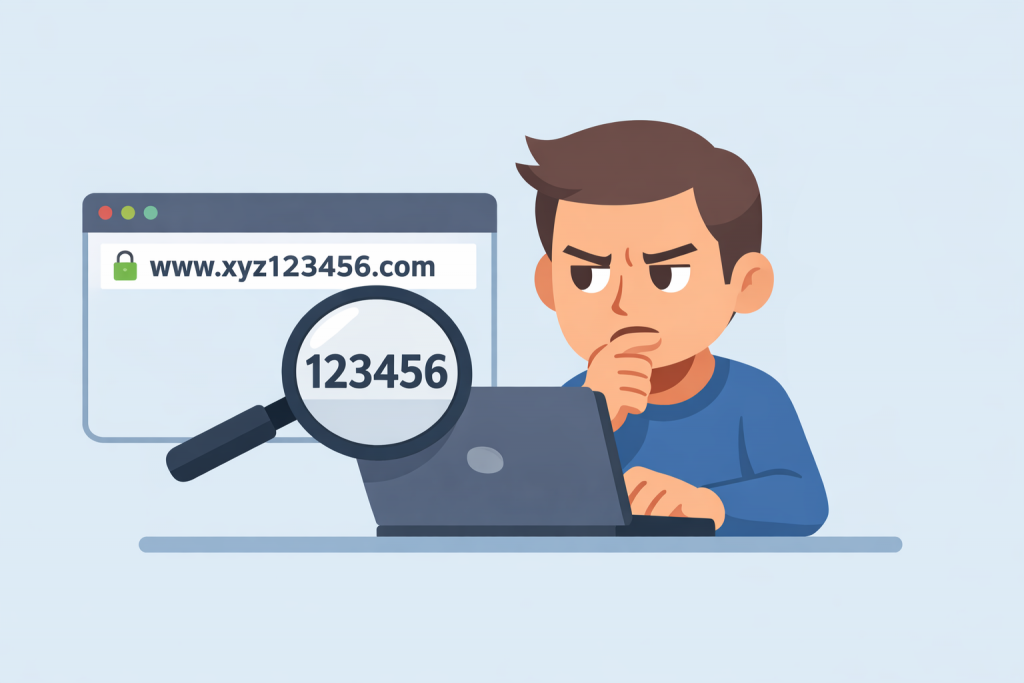
Why a Domain Name with Numbers Raises Suspicion

A man at a laptop carefully examines a website address with a large number of numbers through a magnifying glass, symbolizing doubt and checking the reliability of the domain name.
Domain names with random numbers are often perceived as unreliable and reduce user trust even before the site is launched.

Choosing a domain name may seem like a simple step when launching a website, but in practice the domain creates the first impression of a project. A user sees the address before opening the site and already at this stage subconsciously decides whether the resource can be trusted. One of the most common reasons for a cautious reaction is the presence of numbers in the domain name. Even if the website works properly and the company is legitimate, a domain with numbers is often perceived as less reliable.

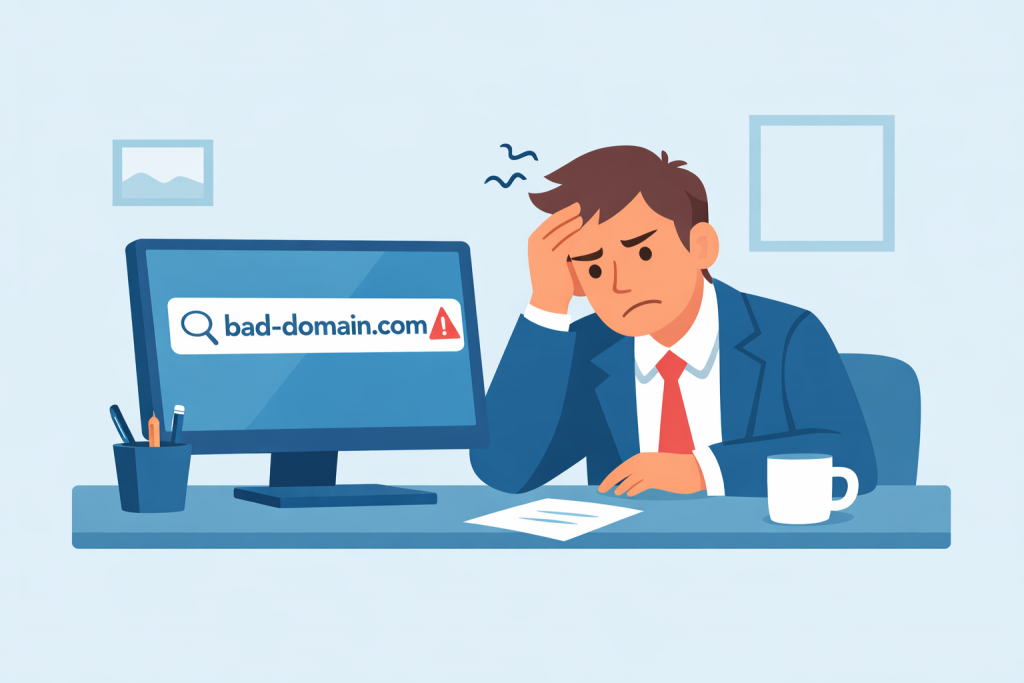
Mistakes When Choosing a Domain That Are Difficult to Fix After Launching a Website

A man in business attire sits at a desk in front of a computer with the domain bad-domain.com displayed on the screen with a warning sign, holding his head and looking worried.
An unsuccessful domain name can become a problem after the project is launched

Launching a website often begins with choosing a domain name. The domain becomes the first point of contact between a business and a user, the foundation of the brand, and the address by which the site is found in search results, advertising, and recommendations. At this stage, many owners treat the domain as a technical formality and do not give it enough attention. Mistakes made when choosing a domain rarely appear immediately, but over time they begin to affect trust, recognition, and even financial results. The most difficult part is that after a website is launched, changing the domain with no losses is almost impossible.

When a Domain Hinders Business Scaling

An entrepreneur climbs up a mountainside to the top with a flag, but is stopped by a large ball with the word DOMAIN written on it, chained to his leg.
When digital limitations start to hinder a company’s growth

In the early stages of business development, a domain name is often perceived as a formality. The main goal is to quickly launch a website, receive inquiries, or sell a product. Entrepreneurs choose what is available, inexpensive, or simply sounds appealing. However, over time, the domain itself can become a factor that quietly yet noticeably restrains business scaling. This does not happen immediately, but rather when a company moves beyond its initial audience, region, or operating model.

Specifics of German Legislation Regarding .de Domains

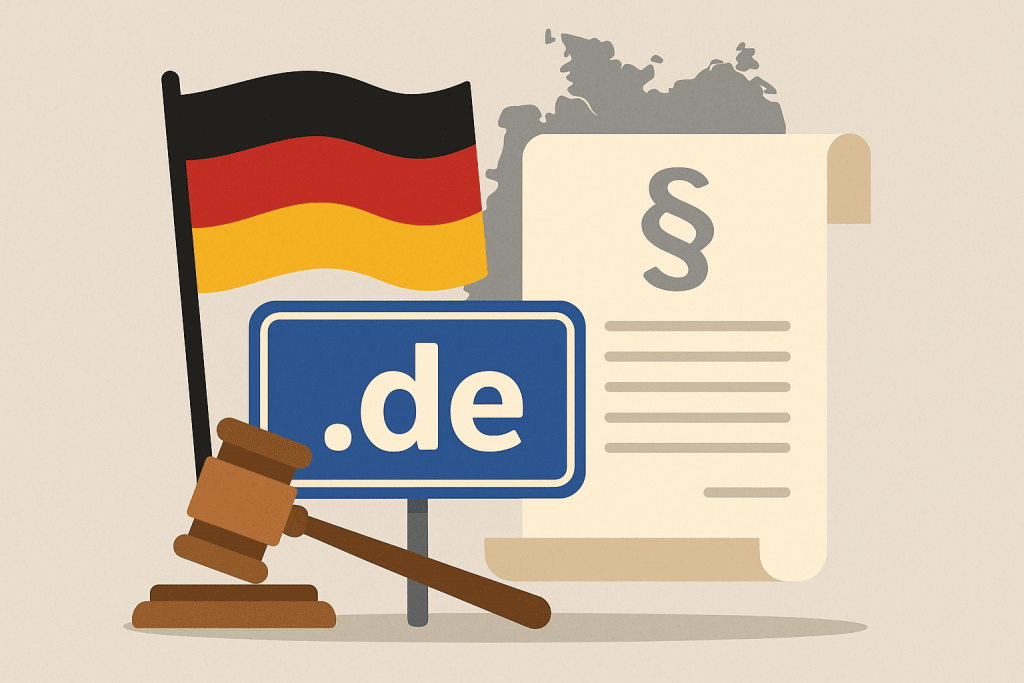
German flag, a sign with the .de domain zone, a gavel and a document with a legal symbol on the background of a map of Germany.
Legal requirements to consider before registering a .de domain

The .de domain zone is one of the oldest and most popular national zones in the world, as it represents Germany in the global internet space. It is characterised by high user trust, strict technical requirements and specific legal rules established to ensure transparency, security and responsibility of domain owners. For this reason, many foreign companies and private individuals pay attention to .de domains, but do not always understand which norms regulate their use. To avoid mistakes and potential risks, it is important to understand the requirements imposed by German law and the domain zone administrator DENIC, and why these rules are mandatory even for registrants who do not reside in Germany.

How Automation and Artificial Intelligence Are Transforming the Domain Market

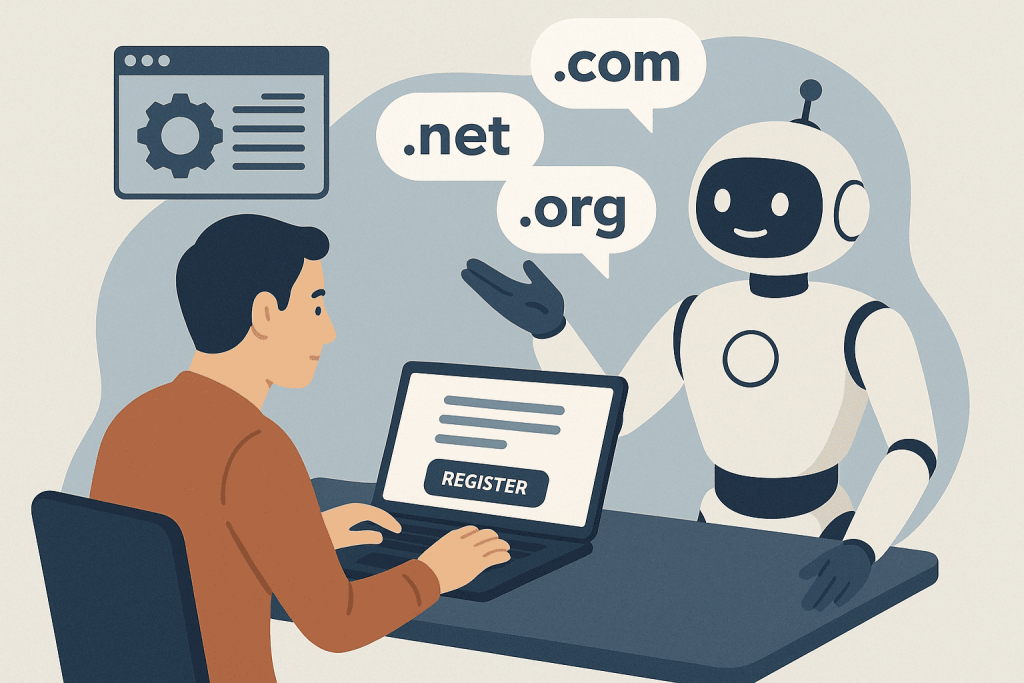
A person registers a domain using a robot with artificial intelligence elements.
Automation and AI are changing the approach to domain registration and zone selection

In a world where every second counts, the domain registration process is undergoing a technological revolution. What once required manual checking, registry communication, and confirmation, now happens automatically — within seconds. Automation systems and artificial intelligence algorithms are reshaping not only the speed but also the very logic of how we work with domains.

Page 1 of 2