

On September 24, 2026, the NCU issued Order No. 736/4531 restricting access to a number of web resources, including the entire .CO.UA domain zone.

On September 24, 2026, the NCU issued Order No. 736/4531 restricting access to a number of web resources, including the entire .CO.UA domain zone.

A blog often appears only after the main website has already been launched. There is a corporate website, an online store or a service, everything works, the domain has been indexed for a long time, and now you need to add a section with articles. And that brings up a very practical question: where exactly should it be placed, and will the whole website have to be rebuilt just for the sake of a blog?
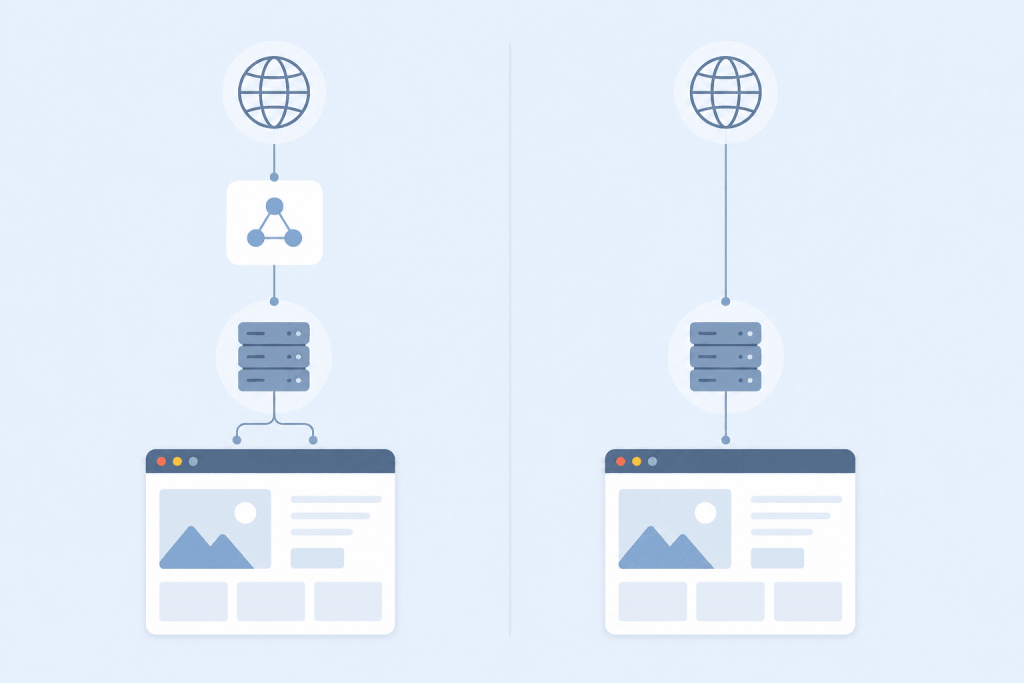
When you see two almost identical addresses in the browser bar – one with www at the beginning and the other without it – it feels like they are just cosmetic variations. In practice, that is usually how it works, but from a technical point of view, these are not the same entities at all.

Many website owners are convinced that if a design looks modern, stylish, and expensive, sales will appear automatically. Beautiful animations, large images, unusual fonts, and creative blocks make an impression—but they do not always work toward real results. The problem is that design is often evaluated through the eyes of the developer or the business owner, not the real user who comes to the site with a specific goal: to understand the offer and make a purchase decision.

Many website owners are confident that everything is fine with their resource: pages open, buttons work, and the contact form functions properly. The site displays correctly on the work computer, loads quickly in a familiar browser, and raises no suspicions. However, the paradox is that at the same time this very website may be almost inaccessible or inconvenient for real clients. Visitors come in but leave quickly, without submitting requests, reading content, or making purchases. The reason lies in the difference between the conditions in which the owner sees the site and those in which users access it.

When a user visits a brand’s website, they do not yet know the product, have not read reviews, and have not compared prices. However, the first impression is already being formed. And very often it depends not on design or copy, but on technical details that operate in the background. Page loading speed, connection stability, correct operation of forms, absence of browser errors — all of this creates a sense of reliability or, on the contrary, causes concern. Low technical quality of a resource is almost always subconsciously perceived as low quality of the brand as a whole.

In today’s internet, loading speed has become one of the key conditions for a website’s success. Businesses invest significant resources into reducing page weight, optimizing images, implementing caching, and minimizing JavaScript and CSS. It may seem that the more optimizations you apply, the better. But in reality, excessive attempts to “speed up” a site often bring the opposite result. The website becomes more complex, less stable, and even slower. To understand why this happens, it’s important to look into the nature of optimizations, their real capabilities, and the hidden consequences that often remain unnoticed at first glance.
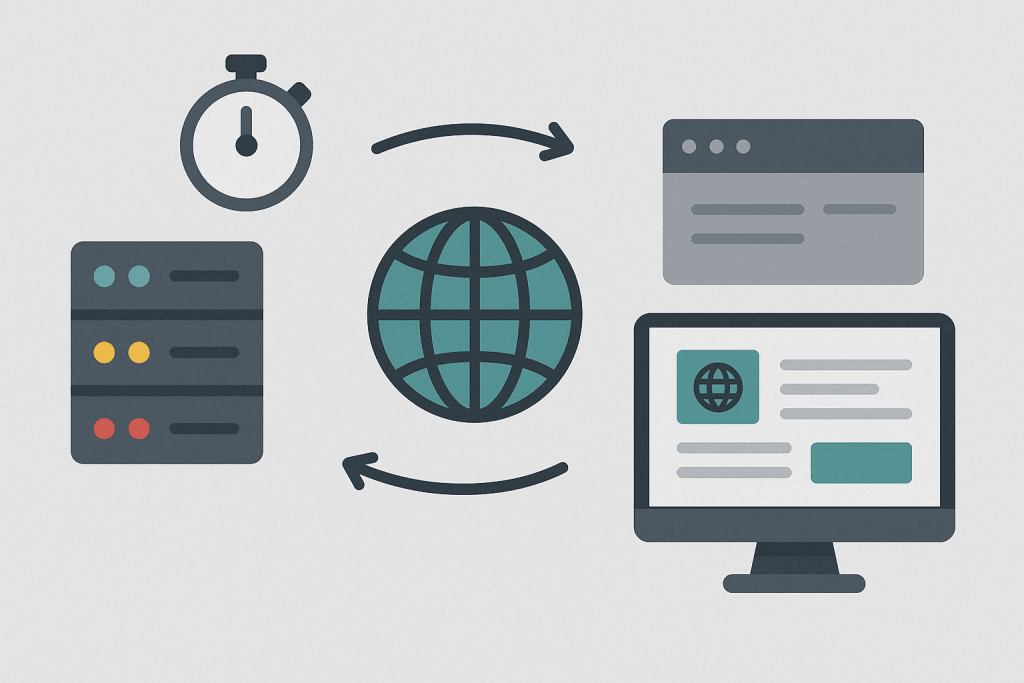
When website owners change content, update the design, move the project to another server, or even change the domain, it’s natural to expect that all users will see these updates immediately. However, the internet works differently. And the main reason for delays in the distribution of new data is the DNS caching mechanism. It determines when exactly the website updates become visible to the world and forms what is often called “DNS propagation.” To understand why this process cannot be accelerated instantly, you need to understand how DNS and DNS caching work.
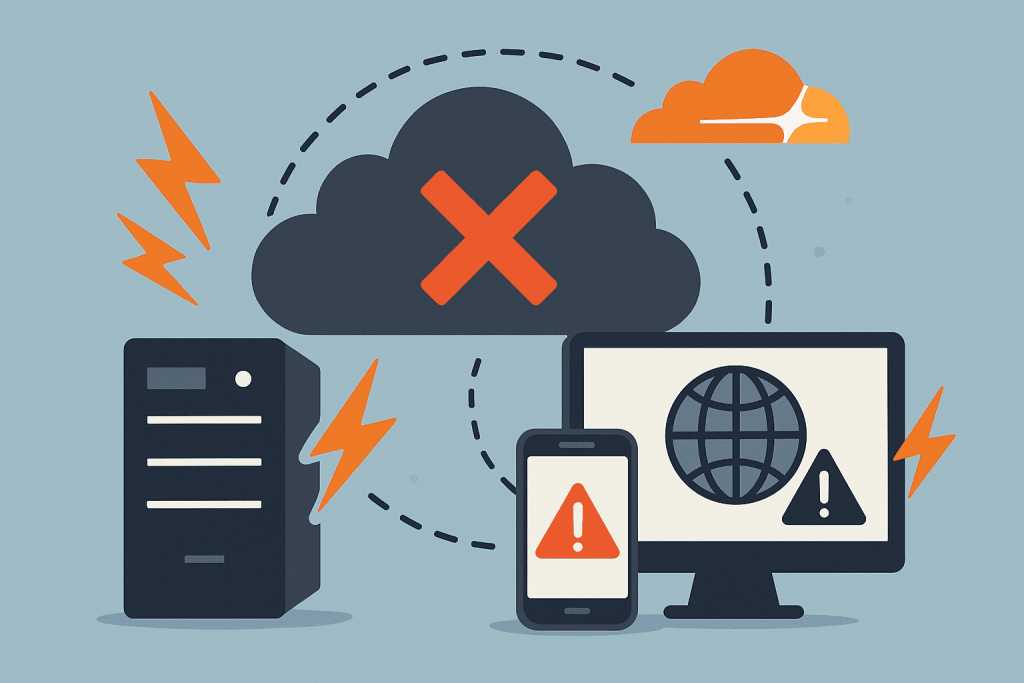
When a small website goes down, it’s a problem only for its owner. But when Cloudflare, one of the largest infrastructure service providers on the internet, goes down, the problem becomes global. The latest outage once again demonstrated that the modern internet depends on Cloudflare far more than it may seem at first glance. Tens of thousands of websites stop loading, some applications behave unpredictably, and even major international platforms fall into digital “darkness.” This is not just a technical incident — it is a reason to reevaluate your architecture and understand how the internet works today.

We’re all used to the idea that the internet “just works”: you type a website address into your browser — and a moment later it opens. But behind this simplicity lies a complex system without which the web wouldn’t exist at all. It’s called DNS — the Domain Name System. This system is responsible for translating the human-friendly domain name into the technical IP address of a server. However, few people realize that to obtain that address, a query may sometimes travel halfway around the planet before reaching its destination. The reason lies in a mechanism known as DNS recursion.