

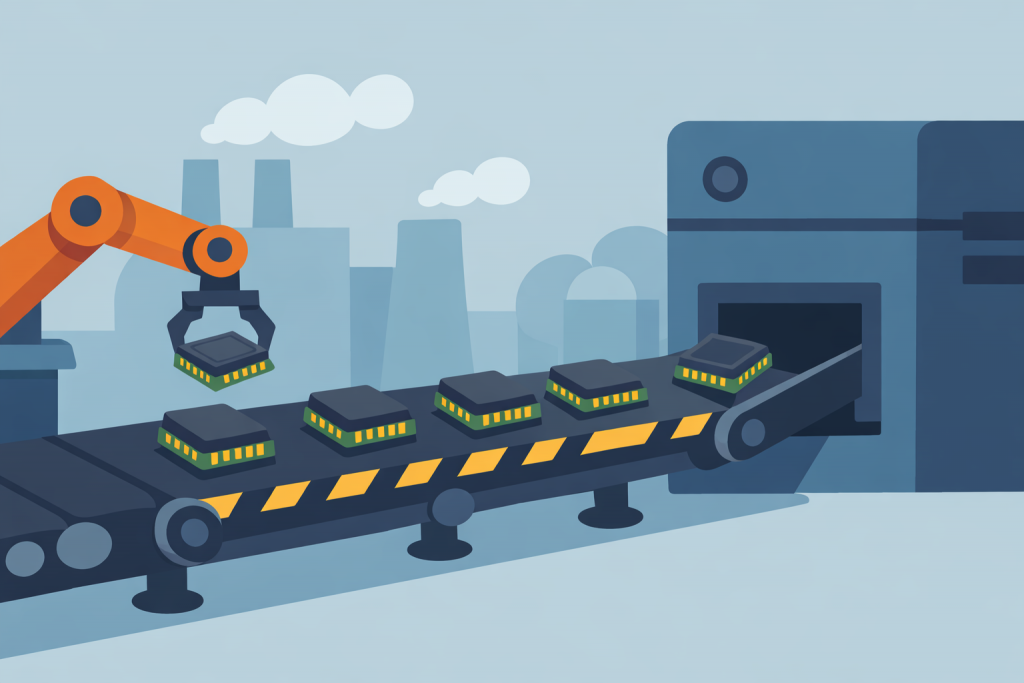
Global digital services are growing faster than ever before. The volume of data, the scale of computations, and the complexity of algorithms are increasing so rapidly that infrastructure can no longer keep up with these changes. What not long ago seemed like a matter of optimization or proper server configuration has now turned into a systemic problem. The world is gradually entering an era of computing resource shortages, where processing power, memory, and bandwidth are becoming insufficient on a global scale.
Where the Shortage in the Digital World Came From
The main reason for these changes is the rapid increase in the complexity of modern technologies. In the past, servers primarily handled websites, email, and basic business systems. Today, a significant share of the load is created by artificial intelligence systems, big data analytics, machine learning, and modeling. Such tasks require not just processors, but enormous amounts of RAM and extremely high data transfer speeds between components.
Digital services can no longer exist in a “lightweight” mode. Even functions that feel routine to users—search, recommendations, automatic translations, or content generation—hide complex computational processes that continuously run in data centers around the world.
Why Memory Has Become the Bottleneck
In this new reality, memory begins to play a key role. This is especially true for HBM—High Bandwidth Memory, meaning memory with very high throughput. HBM is a specialized type of RAM placed as close as possible to the processor or graphics chip, enabling extremely fast data exchange. It is primarily used in AI servers, computing accelerators, and high-performance systems.
Unlike conventional RAM, HBM is significantly more expensive to manufacture and far more complex from a technological standpoint. For this reason, it cannot be scaled quickly in response to rising demand. When companies began deploying AI systems on a massive scale, it became clear that manufacturing capacity simply could not keep up with the market.
Investments as a Response to the New Reality
A telling example of this trend is a recent news story from South Korea. SK hynix confirmed investments totaling 13 billion US dollars in the construction of a new chip packaging plant in the city of Cheongju. The main goal of this project is to meet the growing global demand for HBM memory. Construction is scheduled to begin as early as this spring, with production expected to launch in 2027.
This example clearly shows that the shortage of computing resources is not an abstract problem but a very physical limitation. Increasing capacity is not as simple as updating software or purchasing servers. It requires years of planning, multi-billion-dollar investments, new factories, specialized technologies, and highly skilled personnel.
Why the Problem Cannot Be Solved Quickly
The production of microchips and memory is one of the most complex technological processes in the world. Each new factory is not just a building, but a sophisticated ecosystem of equipment, logistics, quality control, and continuous production cycles. This is why years pass between the decision to invest and the appearance of real, usable capacity.
As a result, the world finds itself in a situation where digital demand grows every day, while physical infrastructure expands much more slowly. This affects the cost of server resources, the availability of capacity, and the strategic decisions of companies, which are increasingly forced to plan their IT infrastructure years in advance.
How Businesses and Users Experience This Shift
For businesses, the era of shortages means that infrastructure stability and predictability become critically important. The inability to scale resources quickly can limit service development, the launch of new products, or the adoption of complex technologies. For end users, this translates into higher prices for digital services, more cautious rollout of new features, and changing approaches to service optimization.
The digital world is gradually ceasing to be “limitless” and is becoming increasingly dependent on real factories, electricity, and physical resources.
Shortage as a New Stage of Development
Despite all the challenges, the shortage of computing resources is not a sign of crisis. Rather, it is evidence of a transition to a new stage of development, where technological progress requires significantly greater effort and investment. Companies that invest in infrastructure today are laying the foundation for the digital world of the coming decades.
That is why topics such as server capacity, memory, and data centers are becoming increasingly relevant not only for engineers, but for businesses as a whole. If you are interested in gaining a deeper understanding of how modern digital infrastructure works and what online services rely on, RX-NAME offers useful materials and solutions related to domains, hosting, and server technologies that help adapt to the new realities of the digital world.
Leave a Reply