
When getting acquainted with a website, users usually do not analyze it consciously — a decision is formed within seconds. Design, name, loading speed, and even the website address work together to create a first impression. That is why the domain zone, meaning the part of the address after the dot, can significantly affect the level of trust. For many people, it carries hidden signals about reliability, geography, business seriousness, or even potential risks.
What a domain zone is and why it matters at all
A domain zone is the suffix in a website name, for example .com, .ua, .org, or .online. Technically, it is needed for the hierarchy of domains in the global internet addressing system. But for an average user, it is not just a technical element — it is a recognizable marker. People get used to certain domain zones over the years, and over time an associative connection forms in their minds between a zone and the level of reliability of the resources hosted there.
How trust in domain zones is formed
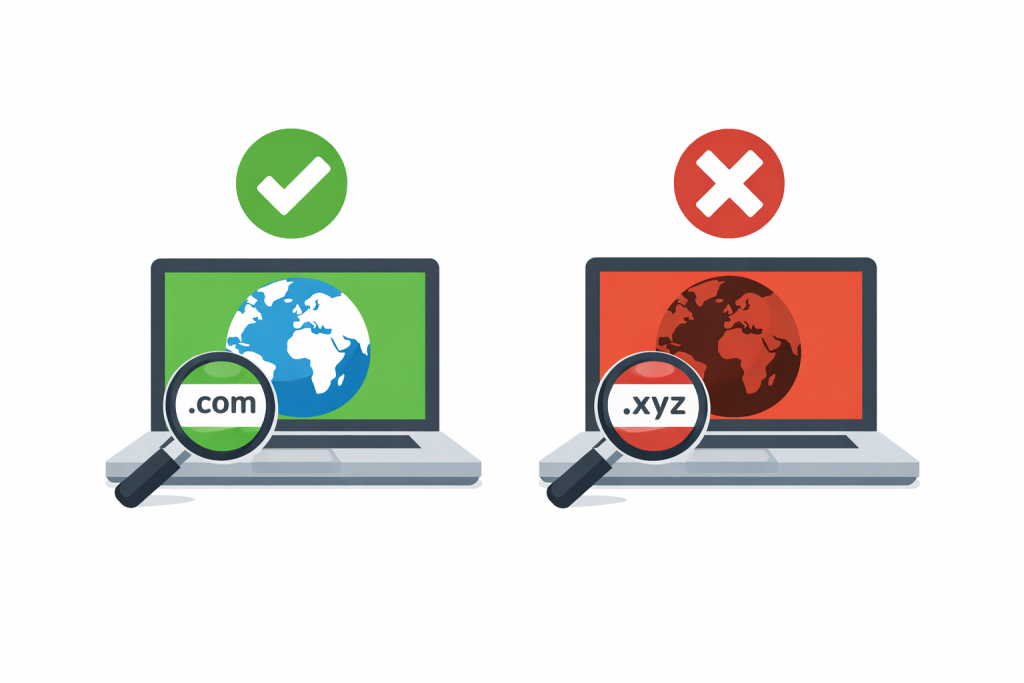
Trust does not arise by chance. It is shaped by experience, reputation, and mass perception. If a user has repeatedly encountered well-known brands, online stores, or services in a particular zone, it automatically begins to be perceived as “normal” or “safe.” Conversely, if a zone is often associated with spam, dubious advertising, or fraudulent websites, even a legitimate resource in such a zone may cause caution even before the first click.
Classic domain zones and the sense of stability
Some domain zones appeared in the early stages of the internet’s development and have retained their popularity to this day. They are perceived as universal and familiar. Users do not question why a website has such an address — it feels natural to them. This effect is especially important for businesses working with a mass audience, where every small detail influences conversion, that is, a person’s willingness to make a purchase or submit a request.
Regional domains as a factor of local trust
Domain zones tied to specific countries or regions are often perceived as more “local” or “one’s own.” Users feel that the website operates within their legal framework and follows familiar rules and realities. This is especially important for services related to payments, personal data, or official services. Even without deep analysis, people subconsciously expect that in case of problems it will be easier to find support or protect their rights.
New and non-standard domain zones and user caution
With the development of the internet, many new domain zones have appeared. They allow the creation of creative addresses and help emphasize a project’s theme. However, for part of the audience, such zones still look unusual. The unfamiliar raises questions, even if the website looks professional. Users may not realize the reason for their doubts, but an internal barrier is already forming. That is why it is important for new brands to compensate for this effect with high-quality content, a clear description of their activities, and transparent contact information.
Domain zones and fraudulent associations
The level of trust is also influenced by how often certain domain zones are used for abuse. When users or browsers regularly encounter phishing websites — pages that disguise themselves as well-known services to steal data — within specific zones, the reputation of those zones deteriorates. As a result, even legitimate businesses may face situations where customers are afraid to visit the website or enter their data there.
Can trust be increased regardless of the domain zone
A domain zone is only one factor, not a verdict. Transparent company information, clear content, the presence of a secure connection usually indicated by a lock icon in the browser, and stable website performance significantly increase trust. Over time, if users have a positive experience, even an unusual domain zone stops being an obstacle. However, starting conditions always differ, and this should be taken into account already at the stage of choosing an address.
A conclusion for businesses and personal projects
Choosing a domain zone is not only about the availability of an attractive name. It is a strategic decision that affects how a website is perceived from the very first second. For some projects, universality and recognizability are important; for others, local relevance or a thematic focus matters more. Understanding how a domain zone influences trust helps build more effective communication with the audience and reduce barriers between the website and the user.
Leave a Reply