
Tag: Technology development

QR Menus: The Technology That Changed the Culture of Dining Out

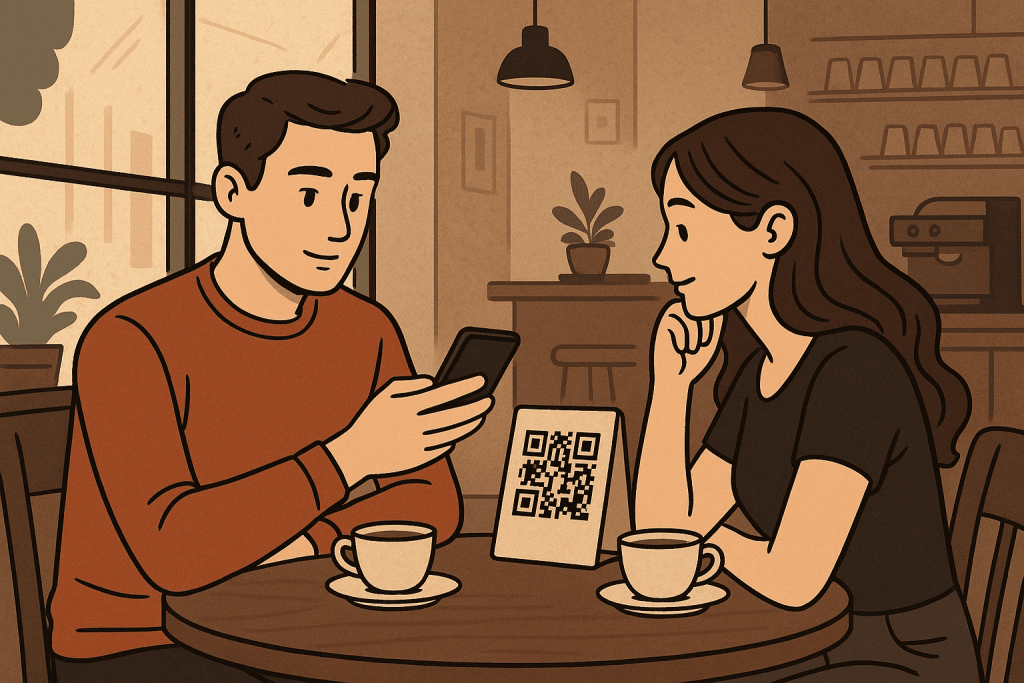
A man and a woman are sitting in a cafe, looking at their phones and scanning a QR code on the table.
QR menu in a cafe – a modern alternative to paper menus

Just a few years ago, opening a menu at a café meant flipping through laminated pages, touching them after dozens of people, and waiting for the waiter to bring one to your table. Today, you’re more likely to find a small square code. Simply point your smartphone camera — and the menu instantly appears on your screen. The QR menu has become not just a convenience but a true symbol of digital evolution in hospitality, reshaping both business processes and the way guests interact with restaurants.

The Future of Artificial Intelligence in Ukraine Begins with State Infrastructure

A microcircuit with the inscription AI next to a building under the flag of Ukraine, against the background of government institutions.
State infrastructure for the development of artificial intelligence in Ukraine

Ukraine is launching AI Factory — the first national infrastructure project aimed at supporting and developing artificial intelligence within the public sector. The idea is to create a reliable, secure, and centralized platform where key AI services of the state will operate — such as the assistant in Diia, the AI tutor in Mriia, and later, systems for healthcare, science, and defense.
This infrastructure will include GPU clusters, data centers with liquid cooling, data storage, tools for dataset preparation, and integration with government registries — all designed to ensure that AI models run fast, reliably, and with full data security compliance.

The History of the First .com Domain and How It Changed the Internet Forever

Cave drawings of primitive people with figures of hunters and animals, among which is written ".com".
The .com domain as the beginning of the digital age and the birth of internet identity

Today it’s hard to imagine the internet without domain names — they make the online world understandable to people. Instead of long numeric IP addresses, we type familiar site names like google.com, wikipedia.org, or facebook.com. But there was a time when none of this existed. In the early 1980s, the internet was mostly an academic network where computers communicated using numbers, and no one imagined that one day those numbers would turn into millions of website names. Everything changed in 1985, when the first-ever .com domain was registered.

Page 3 of 3