

Tag: Technology development Page 2 of 3

The First Email Services and the Birth of Digital Correspondence

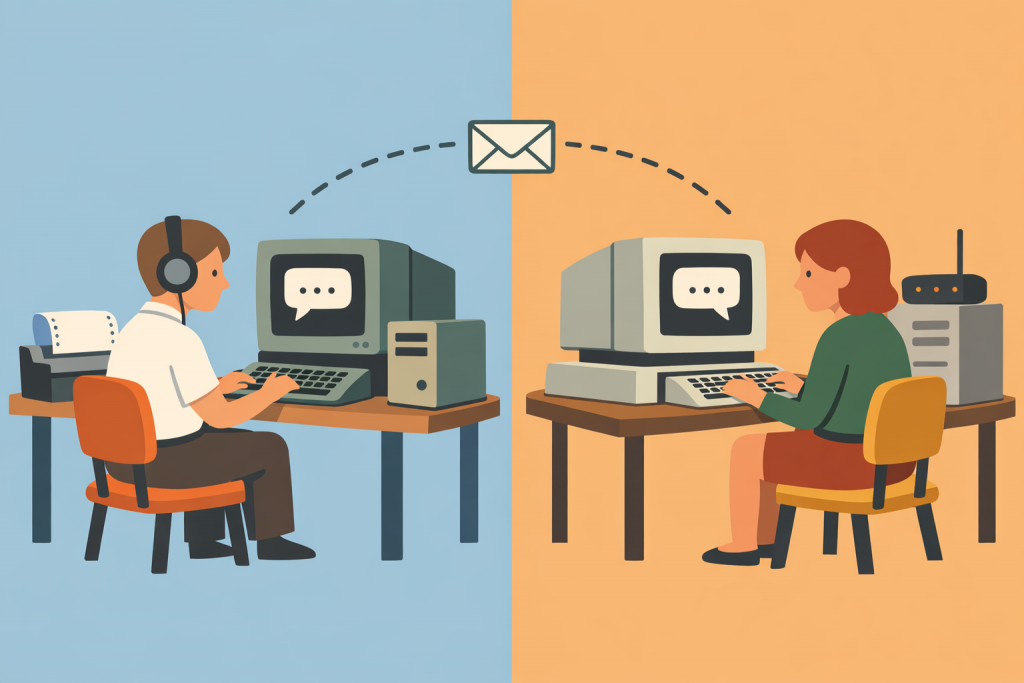
Two people sitting at computers of different generations in different rooms are exchanging an email message, indicated by a letter icon between them.
The beginning of the era of digital communication at a distance

The idea of sending messages over a distance appeared long before computers and the internet. For centuries, people relied on paper letters, couriers, and postal stations. However, with the emergence of computer networks in the second half of the twentieth century, correspondence began to shift into digital form. This period marked the birth of email — a service that later became the foundation of modern digital communication.

The End of the Era of Voice Assistants in the Traditional Sense

A person exits a smartphone with a data box under the icon of the old voice assistant, while another figure stands on the screen with a new AI symbol, representing modern artificial intelligence.
Changing approaches to human interaction with digital assistants

Apple has officially confirmed the integration of Google’s Gemini as the artificial intelligence powering the iPhone. In practice, this means that instead of continuing to develop its own voice assistant, Siri, the company is placing its bet on a third-party, next-generation AI model. For many users, this news may seem like just another ecosystem update, but in reality it points to a much deeper process — the end of the era of classic voice assistants as we have known them.

Will Artificial Intelligence Become an Extension of Human Consciousness

A person with an AI ear clip that records conversations and thoughts expressed out loud, stores them in a personal database, and allows you to quickly find the information you need using artificial intelligence.
Artificial intelligence as a tool for expanding the capabilities of human thinking

At CES 2026, SwitchBot unveiled a device that many have already called a “second brain.” The small AI clip called MindClip, which attaches to the ear, is capable of recording conversations and spoken thoughts, storing them in a personal database, and allowing quick retrieval of the needed information using artificial intelligence. Essentially, it is an external memory for a person that is always close at hand. This news sparked not only interest, but also a very logical question: are we moving toward a moment when artificial intelligence becomes an extension of human consciousness?

When Automation Harms Business

A chatbot behind a laptop responds to a request, while three people with dissatisfied expressions stand opposite.
Digital processes and the human factor in business

Automation has long ceased to be something exceptional. Systems for automated accounting, customer support, billing, and infrastructure management are perceived as a mandatory stage of business development. It promises cost reduction, speed, and scalability. However, automation is not a universal solution. In certain situations, it not only fails to help but also creates new problems that are more difficult and expensive to solve than the original manual processes.

How ChatGPT Evolved and What Plans Are Available Today

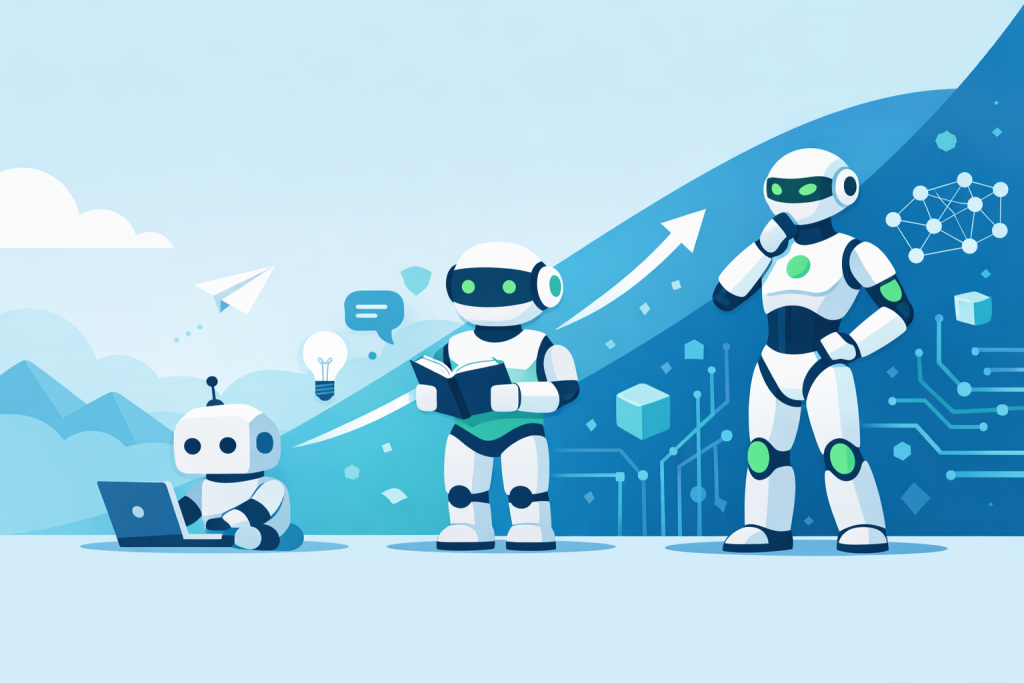
The evolution of artificial intelligence in the form of robots moving from simple tasks to complex analysis and learning.
The development of AI from basic tools to full-fledged intelligent assistants

When ChatGPT appeared at the end of 2022, it was perceived more as a technological experiment. A simple chat capable of answering questions, explaining terms, and writing texts quickly attracted the attention of developers, copywriters, and technical specialists. But even then it was clear that this was only the first step. In a relatively short time, ChatGPT went from demonstrating the capabilities of artificial intelligence to becoming a full-fledged digital tool used by millions of people in their daily work.

Why Interest in Dedicated Servers Is Growing After the Artificial Intelligence Boom

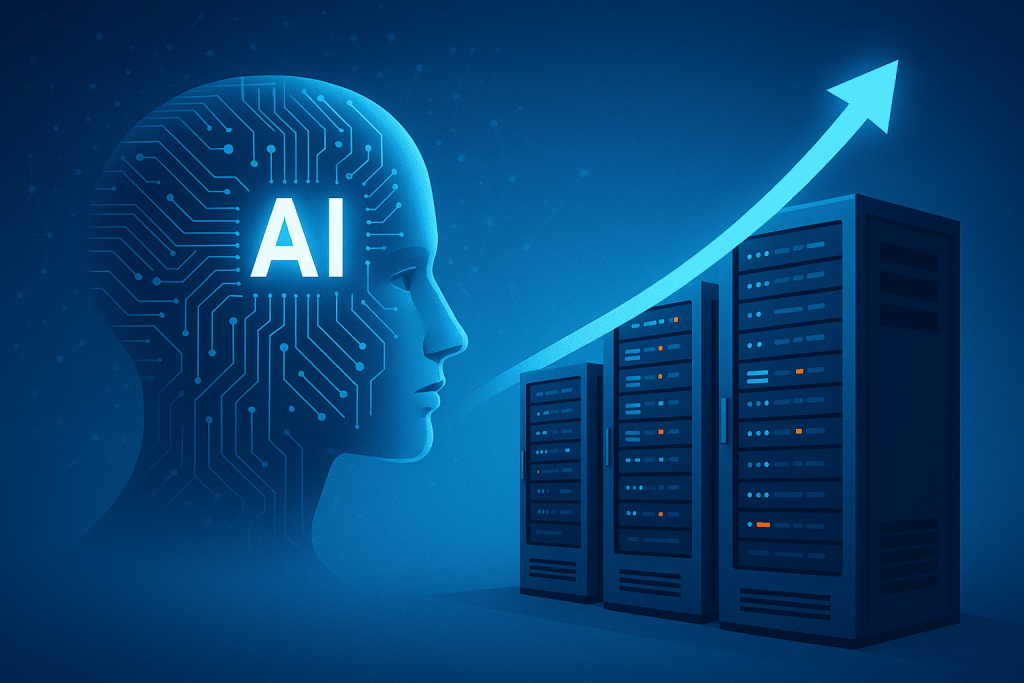
Silhouette of a head with artificial intelligence diagrams next to server racks and a growth arrow symbolizing increasing workloads.
The development of artificial intelligence stimulates the demand for powerful dedicated servers

Over the past few years, the world has experienced a real boom in artificial intelligence. AI-based services have appeared everywhere — from text and image generation to analytics, business automation, and the processing of large data sets. At first glance, it might seem that the development of cloud platforms should have completely covered the need for infrastructure. In practice, however, the opposite is happening: demand for dedicated servers is not decreasing but growing. The reasons for this trend are related not only to the technical limitations of cloud solutions, but also to changes in approaches to security, economics, and control over resources.

Artificial Intelligence Could Become Time’s Person of the Year in 2025

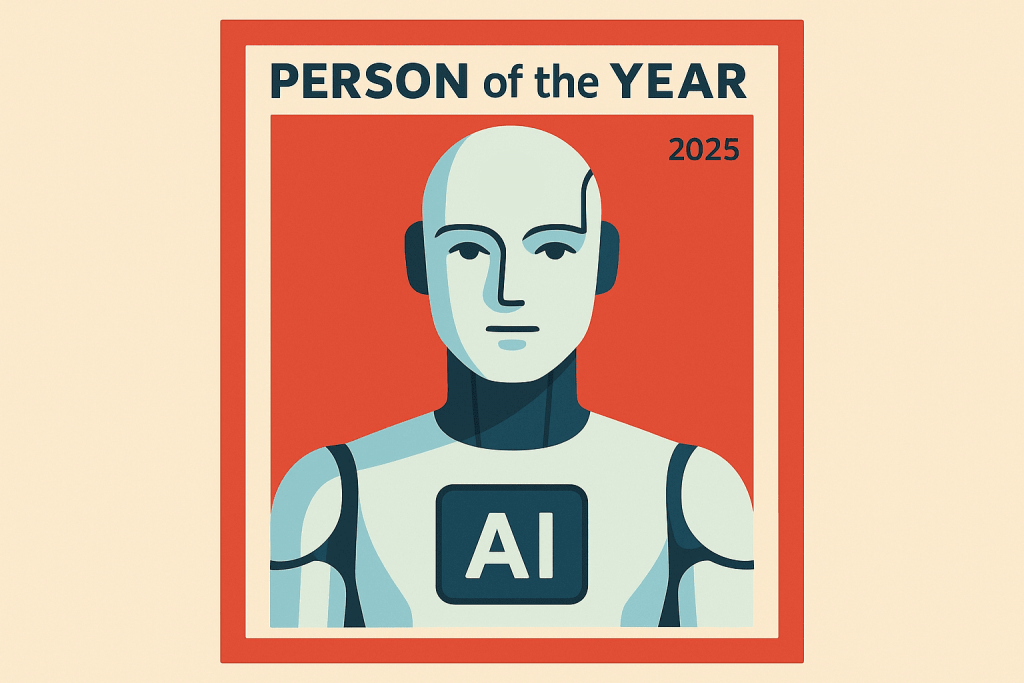
A poster with a robotic character featuring the AI ​​logo, in the context of artificial intelligence possibly being elected Person of the Year.
Will artificial intelligence become the most influential person in 2025?

Every year, TIME magazine selects the “Person of the Year” — an individual, group of people, or phenomenon that has had the greatest impact on the world. This prestigious title is awarded to those whose achievements or influence radically change the world. While the official decision has not yet been made, experts’ predictions and betting platforms are already forming an interesting picture. In 2025, the leading contender for this title, according to forecasters, is… artificial intelligence.

Why Building a PC Will Become More Expensive in the Coming Years

A desktop PC against a background of a growth graph and coins, symbolizing the rise in the price of computer components.
The cost of components is rising faster than the market can adapt

In the coming years, building a personal computer may become significantly more expensive than we are used to. The reason is a global shift of production capacity toward artificial intelligence. Major companies that previously supplied the market with RAM, storage devices, and GPU chips are now redirecting their manufacturing to meet the needs of data centers and AI models. All this creates a shortage of components and leads to rising prices.

How Blockchain Was Used Outside Finance in the Very Beginning

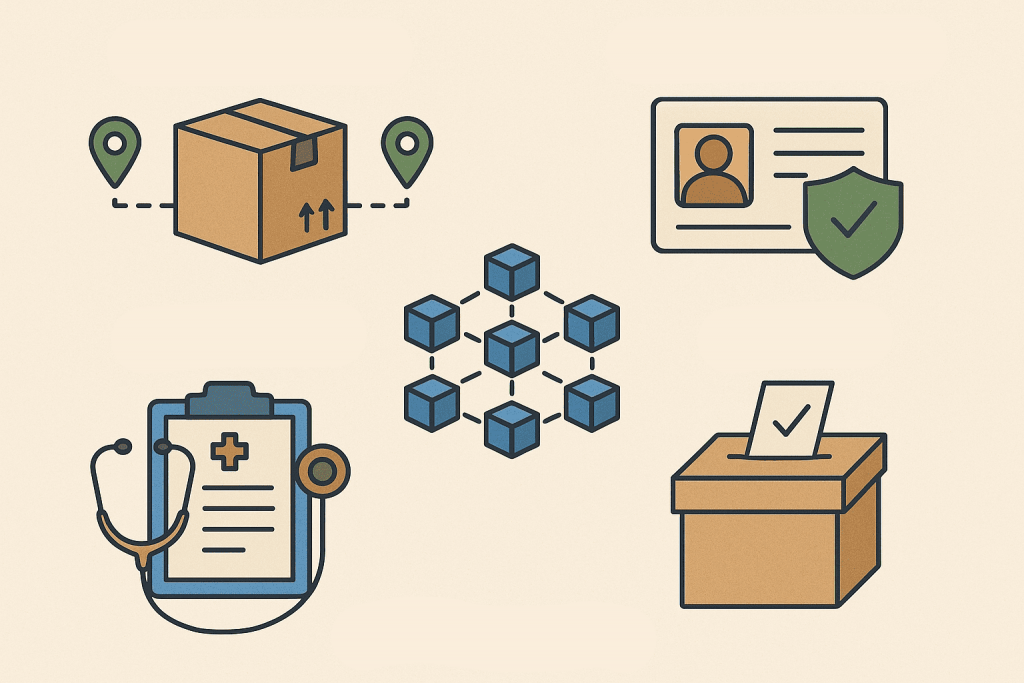
Blockchain applications in logistics, medicine, elections, and digital identification.
The first non-financial blockchain scenarios

When most people hear the word “blockchain,” they immediately think of Bitcoin and other cryptocurrencies. However, the history of this technology is much broader. Blockchain is a special method of storing information as a chain of blocks, where each block contains data and is linked to the previous one through a complex mathematical code. This makes the system transparent, protected from alterations and fraud. It is important to understand that blockchain itself is not a currency but a tool for reliably storing and transferring information.

What the Release of Gemini 3.0 Means for the Future of AI

Glowing silhouette of a human profile next to the Gemini 3.0 logo and AI icon with microcircuits on an abstract network background.
A new stage in the development of models that expands the capabilities of artificial intelligence

The release of Gemini 3.0 has become one of the key events in the world of artificial intelligence. If previous versions were already considered groundbreaking, the third generation of the model demonstrates a qualitatively new level of capabilities, accuracy, and adaptability. It is not only about increasing computational power, but about fundamental changes in the interaction between humans and AI. Gemini 3.0 essentially sets new standards for what a modern intelligent tool should be: fast, universal, context-aware, and as close as possible to human logic. That is why the launch of the model became an important point of transformation for the entire digital ecosystem.

Page 2 of 3