
When a business changes its name, it is rarely about “sounding better.” Usually there is something specific behind it: entering a new market, merging with a partner, parting ways with a former co-founder, launching a new product line. And almost always, at that point, someone brings up the website. More precisely – the domain.
On paper, everything looks simple: the company is renamed, the data in the registry is updated, a new identity appears. But a website address is not just a line in the browser. It is already printed on business cards, listed in contracts, saved in clients’ bookmarks, indexed in search. That is where the nuances begin.
The domain and the company name are not the same thing
From a technical perspective, nothing is “unlinked” automatically. A domain is registered to a specific person or company. As long as the owner does not change and the registration remains valid, the address stays the same. The internet does not care what your business is called now.
But if the domain literally repeats the old name, a mismatch appears. The company operates under a new brand, while the site opens at an address with the previous name. For a small local business, this may not be critical. For an online store running active advertising – it is a different story. A user sees one thing in the ad and another in the address bar. Trust slips in small details.
Sometimes a domain becomes so embedded in a business that it turns into a standalone asset. People remember it, type it without prompts, dozens of websites link to it. In that case, abrupt moves can cost more than it seems at the start.
Is it necessary to change the domain
There is no obligation to change a domain after a rebranding. There are companies whose legal names have not matched their domains for years, and no one is bothered by it. If the address already has history, solid search positions, direct traffic from browsers, it makes sense to think twice – or more – before giving it up.
Another situation is when the new name differs radically from the old one or the business changes direction. For example, a company that started with website development moves into fintech and completely updates its brand. In such a case, the old domain may pull backward. It is associated with the previous niche, the former positioning, even the old reputation.
Then a new domain is usually registered under the new name. But the old one is not switched off in a single day.
What happens to the website and search
If only the company name changes while the domain remains the same, almost nothing happens for search engines. The site continues to be indexed, rankings do not disappear on their own. In practice, this is an internal brand update.
When the decision is made to move to a new domain, things become more technical. A permanent redirect must be set up from old pages to their corresponding new ones. Not to the homepage “just in case,” but page to page. Otherwise, part of the traffic simply dissolves.
Google gradually transfers authority and history, but it is a process. In the first weeks, fluctuations in rankings are possible. If the migration is handled carelessly, the site may lose part of its visibility. Recovery takes time.
Legal details that are not remembered immediately
Changing a company’s name does not remove rights to a domain. If the owner remains the same, control is preserved. But it is important to update contact details in the registry to avoid issues with ownership verification or renewal.
A separate point is the trademark. If the new name is registered as a TM, it is worth checking the domain zones in which the business plans to operate. Especially when the international market is involved. There are cases where the desired domain is already taken or may potentially lead to a dispute. It is better to clarify this before launching a new brand, not after.
How it is usually handled in practice
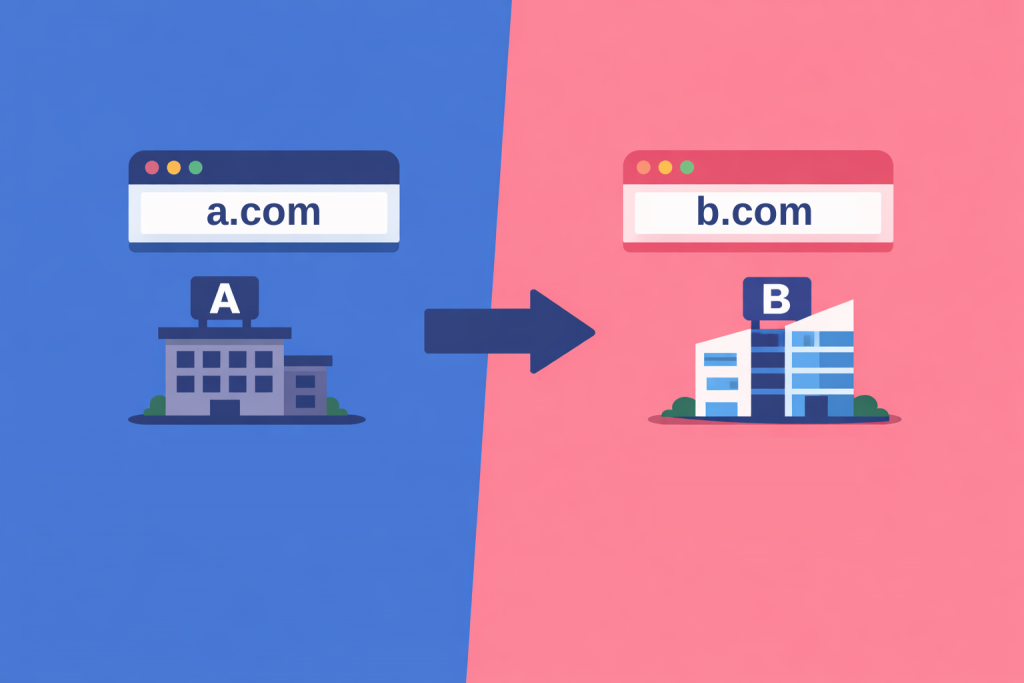
In most cases, the choice is not between “keep” or “remove.” The old domain is kept, a new one is registered, and for a period both are used. The old domain redirects visitors to the new address. In email signatures, advertising materials, social networks, the new domain appears gradually.
This way the business does not lose those who are used to the previous address, while building recognition for the new one. After a year or two, the old domain may remain as a technical tool or as protection against third-party use. Sometimes it is renewed simply for peace of mind.
In this story, a domain is neither a small detail nor a formality. It is an asset that accumulates history along with the company. And when the name changes, it is worth looking at it not only from a legal perspective, but also in terms of reputation, traffic, and the real habits of customers. Otherwise, a detail that seemed minor at first begins to affect things that are much harder to bring back.
Leave a Reply