

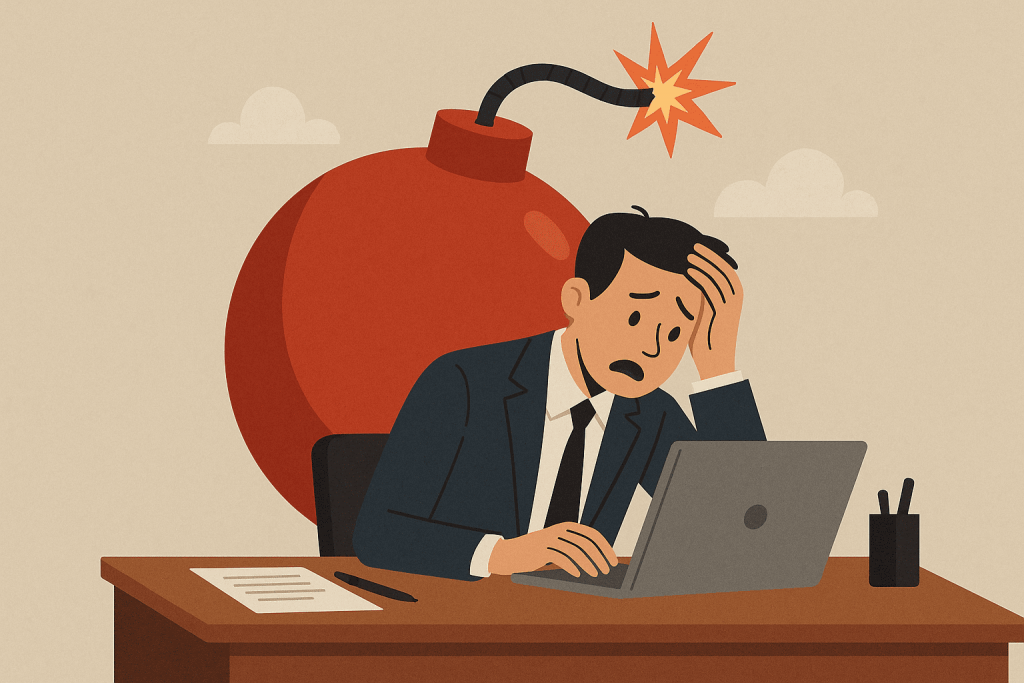
In the modern digital environment, companies invest in the latest security systems, advanced network filters, multi-level authentication and other cybersecurity tools. However, despite the high level of technological development, it is the human factor that continues to remain the biggest vulnerability. The human factor includes actions, mistakes or negligence of employees that may accidentally or intentionally create risks for a company’s information security. And while software and hardware tools can be updated, configured or strengthened, human behavior is much more difficult to change, which is why this aspect requires special attention.
How Employees Become the Weak Link in the Security System
Most often, the threat arises not from malicious intent but from lack of awareness or overload. People may open dangerous emails without realizing the risks. Phishing — fraudulent messages disguised as official emails from banks, partners or government services — remains one of the most popular attack methods. Users see a familiar sender name, open attachments or follow links, after which their computer becomes infected with malware. It is important to understand that even experienced employees sometimes make mistakes, as modern phishing campaigns have become very convincing and professional.
Another common example is the use of weak or repeated passwords. Many people use the same password across different services, which makes access to corporate systems vulnerable if data is leaked from any of those platforms. Even with two-factor authentication enabled, employees may accidentally approve a suspicious login by not carefully checking the notification. Equally dangerous is the situation when employees store confidential information on personal devices that do not have the necessary level of protection.
Why Even Modern Technologies Cannot Fully Offset Human Errors
Most security systems rely on specific behavior and response algorithms. They can detect anomalies, block suspicious connections or prevent access to dangerous websites. However, when an employee themselves provides access to an attacker, technology cannot always stop it. For example, if a user manually enters corporate account credentials on a fake website, the system may not recognize it as dangerous until it is already too late. People may also ignore risk warnings, disable protective mechanisms or downplay security rules, assuming that “nothing will happen to them.”
Another aspect is related to stress and heavy workloads. Employees working at a fast pace often act intuitively, without carefully checking each message or request. In such conditions, even the best security system cannot guarantee complete protection if a person is rushing, tired or distracted. This is why companies increasingly focus not only on technical tools but also on building a strong internal security culture.
How to Minimize Risks Associated with the Human Factor
Reducing risks starts with training. When employees understand key threats, know modern attack methods and can recognize suspicious activity, a significant part of potential incidents simply does not occur. Regular training is essential because fraud techniques constantly evolve. Explaining terms such as “phishing,” “attack vector,” “malware” or “social engineering” helps remove fear around technical topics and makes them accessible to every employee.
Equally important is the implementation of clear internal rules and procedures. When employees know exactly how to act in suspicious situations, where to report potential threats or how to respond to unusual requests, they feel more confident and make fewer careless actions. It is also essential to create an atmosphere where employees are not afraid to ask questions or report suspicious activity, even if they are not fully sure about their assumptions.
Why Businesses Must Protect Their People Just as Much as Their Technology
Companies that view the human factor as a key part of security significantly reduce the chances of successful attacks. A person can either become the main barrier against attackers or, on the contrary, their tool. Therefore, businesses must invest not only in technical solutions but also in continuous development of employee awareness. This includes training, communication, support and building an environment where every team member treats security as part of their daily responsibilities.
And although technology continues to evolve, no system can replace attentiveness, responsibility and understanding from employees. When these three elements combine with reliable security tools, a business gains strong protection against most common threats.
If your business wants to strengthen its security level, it’s worth starting with a reliable infrastructure. RX-NAME provides modern solutions for hosting, servers and data protection, helping companies build a strong and secure digital foundation.
Leave a Reply