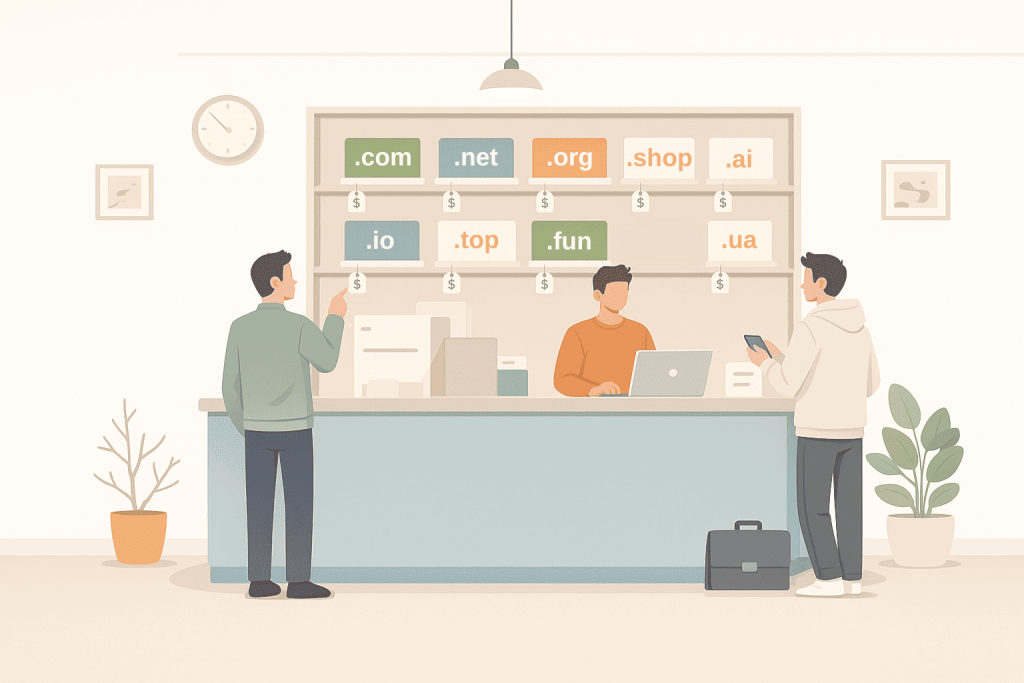
The secondary domain market is an environment where domain names that have already been registered in the past are bought and sold. Unlike primary registration, where a domain is purchased directly from a registrar at a fixed price, on the secondary market the price is determined by demand. Simply put, a domain becomes a digital asset similar to real estate: if an address is short, clear, associative, or related to a popular topic, its price can increase several times over. That is why the secondary market has existed for decades and continues to grow steadily along with the internet.
Why Some Domains Are Expensive
The value of a domain is determined by several factors that are easy to understand even without technical knowledge. First of all, this is length and readability: short names without hyphens or numbers are easier to remember. Semantics also play an important role — the meaning of the word or phrase. For example, domains related to finance, travel, real estate, or technology traditionally have high demand. The domain zone, meaning the ending of the address, also matters: classic zones such as .com or popular national domains are usually valued higher. A separate factor is the domain’s history, because if it was previously used for a real website, had traffic, or was mentioned online, this can increase its attractiveness.
How Earning Money on Domains Works
Earning money on the secondary domain market is often called domain investing. The concept is simple: a domain is purchased at a relatively low price with the intention of reselling it later at a higher price. An investor analyzes trends, the development of business niches, the emergence of new technologies, or changes in consumer behavior to predict which names may become in demand. For example, with the appearance of new services or fashionable directions, interest in relevant keywords can grow sharply. If a domain is chosen well, a buyer may appear even after several years, but at a significantly higher price.
Where Buying and Selling Transactions Take Place
The secondary domain market operates through special platforms called domain marketplaces. These are platforms where owners list domains for sale, and buyers can search for suitable names, compare prices, and complete transactions. Such services often act as intermediaries, ensuring secure payment and the transfer of domain ownership. For beginners, this is especially important, since direct deals without guarantees can be risky. Marketplaces simplify the process and make the secondary market accessible to a wide audience.
Risks and Beginner Mistakes
Despite its attractiveness, earning money on domains is neither fast nor guaranteed. One of the most common mistakes is buying domains without real demand, relying only on personal preferences. It is also important to consider renewal costs, as a domain must be paid for every year even if it has not yet been sold. There are also legal risks: using names similar to well-known brands or trademarks can lead to the loss of the domain without compensation. That is why successful investors always analyze the market and act cautiously.
Who the Secondary Domain Market Is For
The secondary domain market attracts not only investors but also businesses. For companies, it is an opportunity to obtain an ideal address for a brand that has long been taken but is available for purchase. For individuals, it is a way to monetize analytical thinking and an understanding of internet trends. It is important to view domains not as a lottery ticket, but as a long-term asset that requires patience and a systematic approach.
Why Interest in Domains Is Growing
Every year, the number of online projects increases, while the number of good available domains continues to shrink. Businesses are increasingly willing to pay for a clear and strong address that immediately inspires trust and is easy to remember. This is what makes the secondary domain market active and promising. For some, it is a branding tool; for others, it is a form of digital investment that can generate income in the long term.
Leave a Reply