

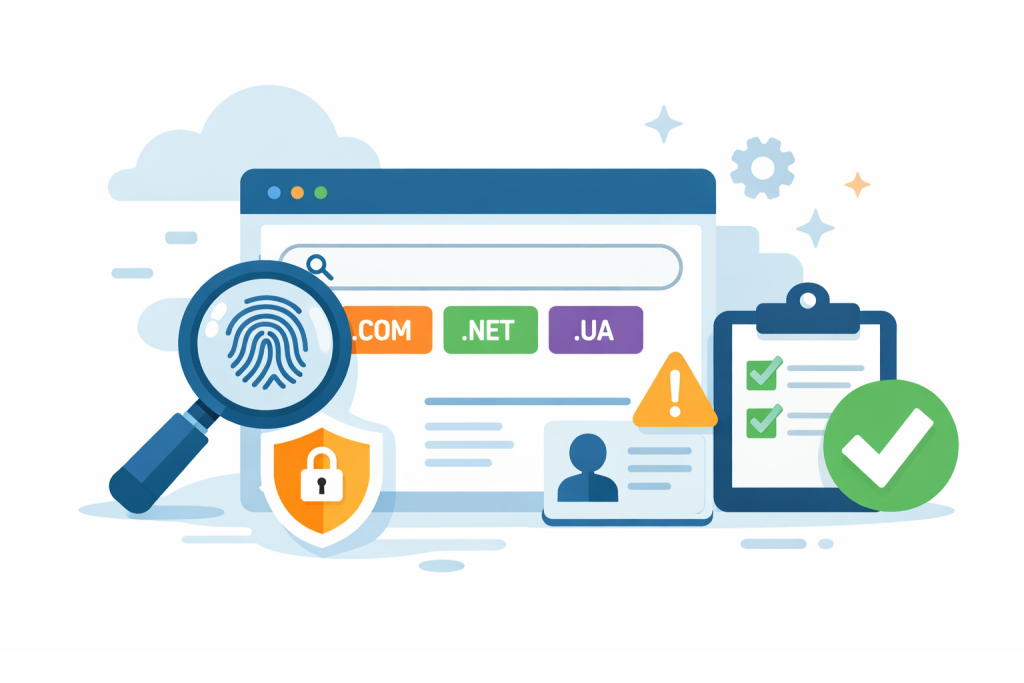
In practice, choosing a domain often runs into the technical regulations of registries, which users usually discover only after payment. Automatic activation within five minutes is the standard for mass-market zones such as .COM or .NET, but there are many extensions where manual moderation or document verification is an integral part of the process. Registries introduce these barriers not to create difficulties, but to filter out cybersquatters, fake organizations, and protect the reputation of the zone itself.
The strictness of national zones
Local domains (ccTLDs) most often have their own specific “filters.” The closest example is the .UA zone. Here it is not enough to simply invent a name; the regulations require a valid trademark that is completely identical to the domain. The administrator checks the certificate number in official databases, so delegation always takes time.
Across European zones the approaches differ. For example, the French .FR or the German .DE may require confirmation of physical presence within the EU. If a fictional address is provided or a privacy-protection service is used, the registrar may suspend the domain until real utility bills or extracts from official registers are submitted. This is a working mechanism for reducing anonymity in the local segment of the network.
Specialized and restricted extensions
Domains such as .EDU and .GOV stand apart. Here verification becomes a full audit of the organization’s status. It is impossible to obtain such an address without sending official documents confirming accreditation or government registration. As a result, these zones are considered among the most trusted: users generally assume that a real institution stands behind the name.
Zones like .ORG or .NGO, although they appear open, sometimes fall under selective review. If a domain name claims the status of an international foundation or humanitarian mission, the registry may request proof of non-profit status to prevent scammers from collecting donations under the guise of charity.
Premium names and risks in popular zones
Even in “open” zones such as .COM or .IO there are nuances. So-called premium domains – short, dictionary-based, or potentially conflicting names – often pass through a manual filter. A registrar may delay activation if there is a clear overlap with a well-known brand or if the transaction price is significantly higher than the average. This is a standard precaution designed to prevent chargebacks and copyright disputes before they start.
A separate case is brand TLDs (.GOOGLE, .APPLE). They do not provide public registration at all. Any activity within such zones is controlled by the brand owner, which effectively excludes the appearance of third-party resources.
What to consider before purchasing
Before planning a marketing campaign or launching a project, it is worth checking the Whois requirements of the selected zone. If it is .UA – prepare a trademark. If it belongs to the government or educational sector – prepare a package of registration documents. In some cases the verification process may take from several hours to several weeks, and this should be factored into development timelines.
Additional verification is primarily about asset security. A domain that has passed through several layers of checks is significantly harder to “steal” or challenge in the future, because its legitimacy was already confirmed at the moment it was created.
Leave a Reply