
A successful product landing page launch doesn’t start with just choosing a product and ads. Orders are often lost before the “Buy” button because of mistakes in the page itself, in testing and in handling leads.
If 1,000 people visit the site and the conversion rate is 2%, that’s about 20 leads. At a 5% conversion rate, the same traffic brings 50. In other words, growing sales sometimes takes not a bigger ad budget but a better path from click to order.
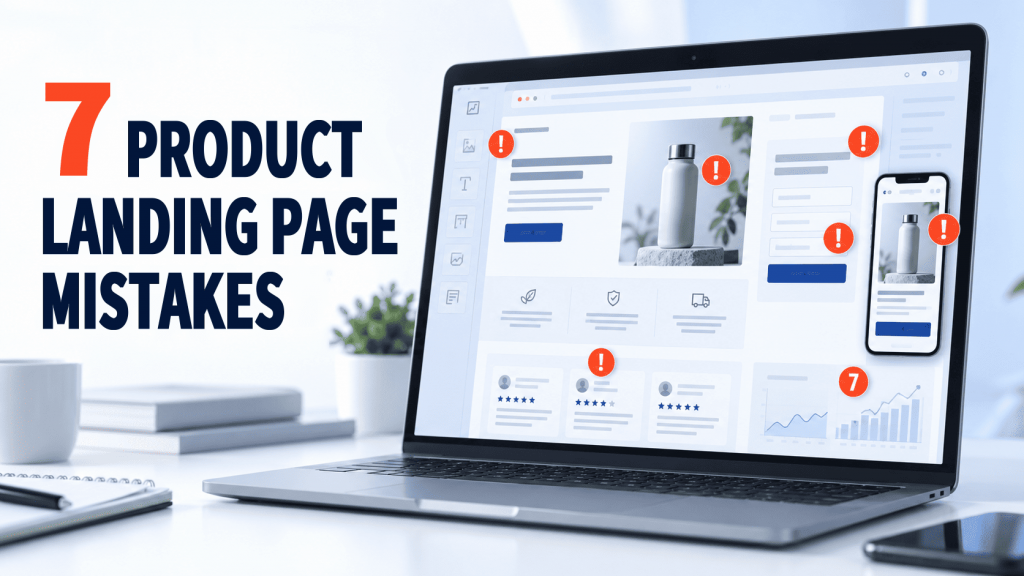
Here are 7 mistakes that most often keep a product business from getting the most out of its landing page.
1. Launching without analyzing the product
Seeing a popular product in competitors’ ads doesn’t mean you should launch it right away. Before creating the page, it’s important to check demand, prices, how competitors present the product, their creatives and the key advantages of their offers.
This stage helps you understand what the buyer is willing to pay for and how your offer can stand out. If competitors sell the product with a standard discount, you can test a gift, a bundle, free delivery or a focus on a specific customer problem.
The mistake is spending the budget without testing the hypothesis.
2. Spending too much time on the landing page
A common mistake is spending weeks creating the “perfect” site without even knowing whether the product will sell. An expensive design won’t save a hypothesis that doesn’t work.
At the start, it’s better to make a simple landing page, launch ads and get your first data. Then you can change the headlines, photos, offer and structure based on the results.
For a quick test, you can use LP-MOBI, a product landing page builder where you can put together a page from a ready-made template or individual blocks without any coding. The service supports your own domain and SSL, connecting Meta Pixel, TikTok Pixel and Google Analytics, as well as sending leads to LP-CRM, Telegram or email. The free plan includes one active landing page and up to 50 orders, so you can test a product hypothesis without spending money on website development.

3. Buying stock before checking demand
Another typical scenario: an entrepreneur orders a large batch and only then starts thinking about advertising. If the product doesn’t catch on with the audience, the money stays tied up in inventory for a long time.
It’s safer to test the product through a landing page first, process the leads and check their quality. Only after that is it worth buying a larger quantity.
A test reduces risk and doesn’t freeze your budget in an untested product.
4. Making the landing page confusing
A customer shouldn’t have to guess what exactly you’re selling and why they need it. If the first screen doesn’t grab attention, the person may leave before they even see the product’s benefits.
A strong headline is better built around the result rather than the product name. Not just “neck massager” but the specific benefit the person will get. Add a high-quality photo or video of the product, the current price, a clear button and the key condition of the offer.
Next, the page should answer: what it is, what problem it solves, why it’s worth trusting, how much it costs and how to order.
Don’t overload the page with dozens of blocks. Benefits show the value, reviews build trust, terms remove objections, and the form helps place the order.
5. Overcomplicating the form and not adding trust
The more unnecessary fields a form has, the higher the chance the person changes their mind. For most products, a name and phone number are enough at the start. Don’t make the customer fill in what a manager can clarify during the call.

Trust is just as important. The person is seeing your store for the first time, so they need proof that they’re dealing with a real seller. Reviews, customer photos, videos, and information about payment on delivery, warranty, delivery and returns are all appropriate here.
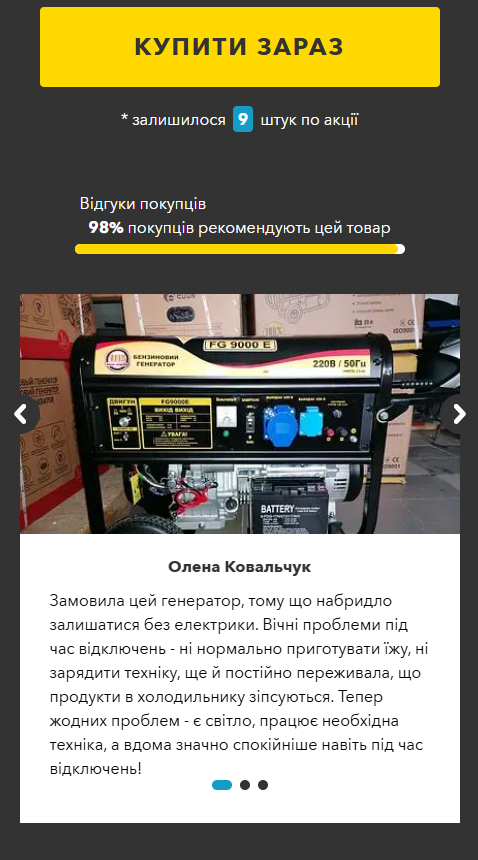
Real screenshots of chats or photos of received parcels work too. But use only genuine reviews.
6. Not testing the offer and the landing page itself
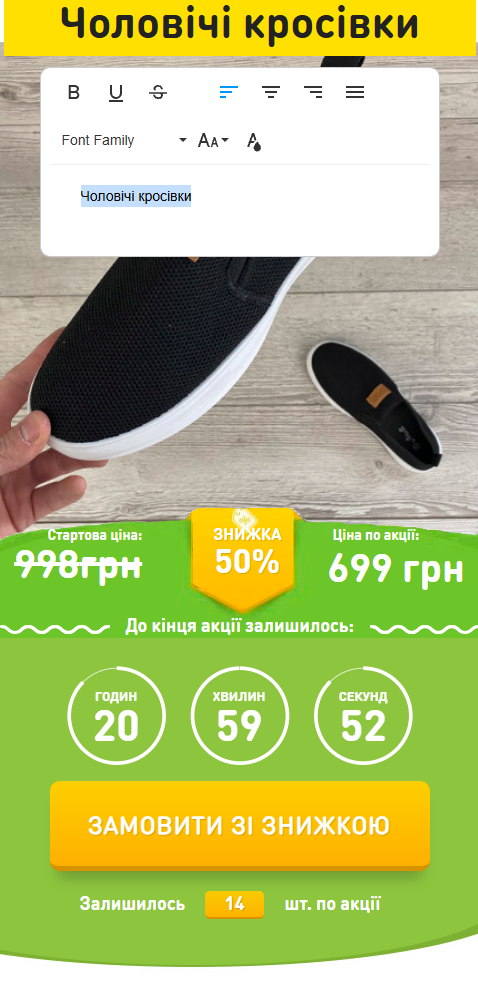
Even a good product can sell differently depending on how it’s presented. A discount, a gift, a bundle, free delivery or a “1+1” format can change the buyer’s decision. That’s why you need to test not only the ads but also the offer itself.
Don’t change the headline, photo, button and price at the same time. Otherwise it’s unclear what produced the result. Test one element at a time: the headline, photo, offer or button.
LP-MOBI is especially convenient in this scenario: you can make changes to the landing page without a long development cycle. This lets you test hypotheses faster and gradually increase conversion.
Another important metric is speed. If the page takes a long time to open, part of the traffic won’t wait for the content. Check it especially on smartphones.
7. Launching ads and not analyzing anything after that
Having leads doesn’t yet mean effectiveness. Look at CPM, CTR, cost per lead, page conversion rate, user behavior and ad frequency.
If people click but don’t submit requests, the problem may be the landing page. If there are few clicks, check the creative, the audience and the offer.
Evaluate profit too, not just the number of leads. A cheap lead doesn’t mean a good result if customers don’t buy.
What a good product landing page should have
An effective landing page isn’t a page with the maximum amount of information but a short route to a purchase. The first screen grabs attention, benefits explain the value, proof builds trust, the offer motivates action, and a simple form removes barriers.
Start not with the question “how do I make the perfect website?” but with “what hypothesis am I testing?” Create a simple version, bring in traffic, look at the numbers and improve what actually affects the result.
In a product business, the advantage goes to whoever tests, analyzes and learns from data faster. A good landing page isn’t just a storefront but a tool that helps turn ad traffic into orders.
Leave a Reply