
Month: February 2026

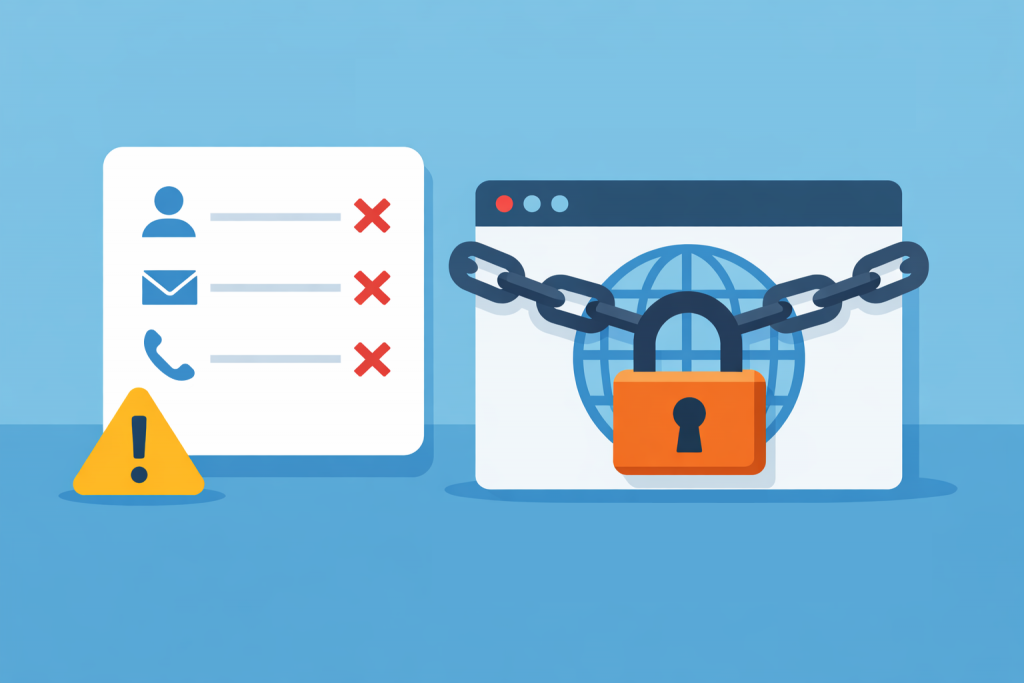
How an Error in Contact Details Can Block a Domain

When a domain is registered, the form with contact details usually gets very little attention. The name is checked, the payment goes through – the main thing is that the domain starts working. Fields with the name, phone number or email are often filled in quickly. Sometimes the data is even copied from old accounts or internal documents. The problem shows up later.

Why an SSL Certificate May Not Work on Subdomains

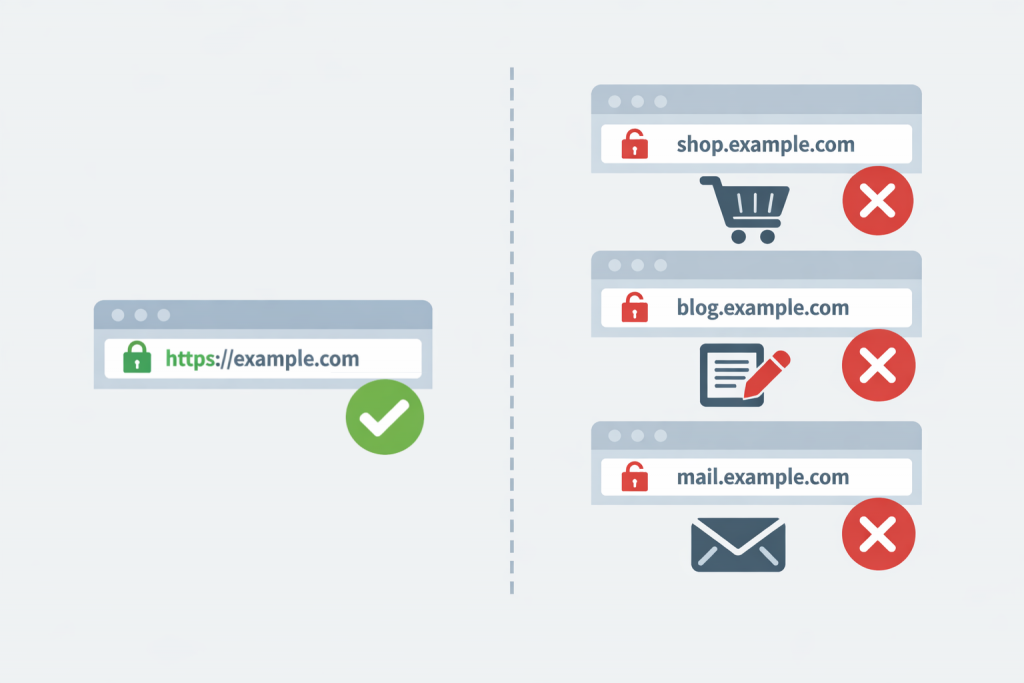
Main domain with active HTTPS and subdomains with errors without a secure connection.
SSL doesn’t always automatically extend to subdomains

The situation is familiar to many website administrators. The main domain opens normally: the lock icon is visible in the browser, HTTPS works, there are no warnings. But as soon as you switch to a subdomain – for example blog.example.com or mail.example.com – the browser suddenly shows a message about an unsafe connection. For the user this looks like a website error. In reality, in most cases the server itself works normally. The issue is usually hidden in the way the certificate was issued or connected.

A Selection of Services for Checking IP Address Blocking

Monitor with IP address on screen, magnifying glass for checking, geolocation, security, global network and servers icons symbolizing IP address blocking analysis.
Checking IP availability helps you find the cause of connection problems faster

Problems with access to a website, mail server or API often begin without visible reasons. The page opens for you, but “lies down” for part of the users, emails do not reach recipients, and third-party services simply drop the connection. In many such cases the root of the problem is not bugs in the code or configuration mistakes, but the reputation of the IP address.

Why Backups Are Critical for Crypto Wallets

Crypto-gammon with Bitcoin, which synchronizes with the server and the dark storage system to save and backup data.
Backup is a single way to update access to digital assets

Cryptocurrency is often perceived as something ephemeral that lives “on the internet.” Because of this, a dangerous illusion appears: as if access to coins could be restored through email or technical support, like a regular password. In practice, the logic of how wallets work is fundamentally different. There is no administrator here who can reset settings or confirm your identity using a passport. A backup is not simply a “plan B,” but the only and final way not to lose money forever.

Which domain zones require additional verification during registration

Illustration with a browser, .com, .net and .ua domain zones, verification, security and warning icons symbolizing additional verification during domain registration.
Some domain zones have increased verification requirements

In practice, choosing a domain often runs into the technical regulations of registries, which users usually discover only after payment. Automatic activation within five minutes is the standard for mass-market zones such as .COM or .NET, but there are many extensions where manual moderation or document verification is an integral part of the process. Registries introduce these barriers not to create difficulties, but to filter out cybersquatters, fake organizations, and protect the reputation of the zone itself.

Why Domain Transfer Is Not Possible Immediately After Registration

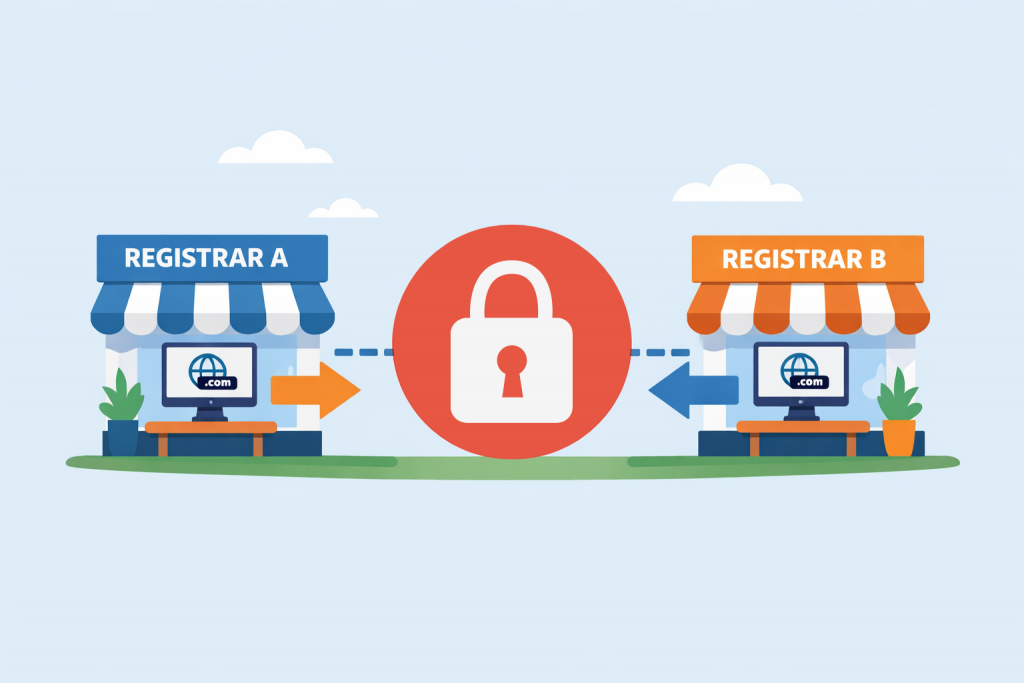
Two domain registrars, labeled Registrar A and Registrar B, between which the domain transfer directions are shown, and in the center is a lock symbolizing the temporary blocking of the transfer after registration.
After registration, the domain remains blocked for transfer for some time.

Practice shows that an attempt to change the registrar during the first week after purchasing a name is one of the most common reasons for contacting support. The owner sees a paid invoice, an active status in the control panel and logically assumes the domain is their property, something they can manage however they wish. Yet a technical refusal to transfer at this stage is not the whim of a particular company but a strict rule defined at the protocol level.

Page 2 of 2