
Tag: Gemini

How technologies are learning to work with uncertainty, and how this is connected to the new version of Gemini

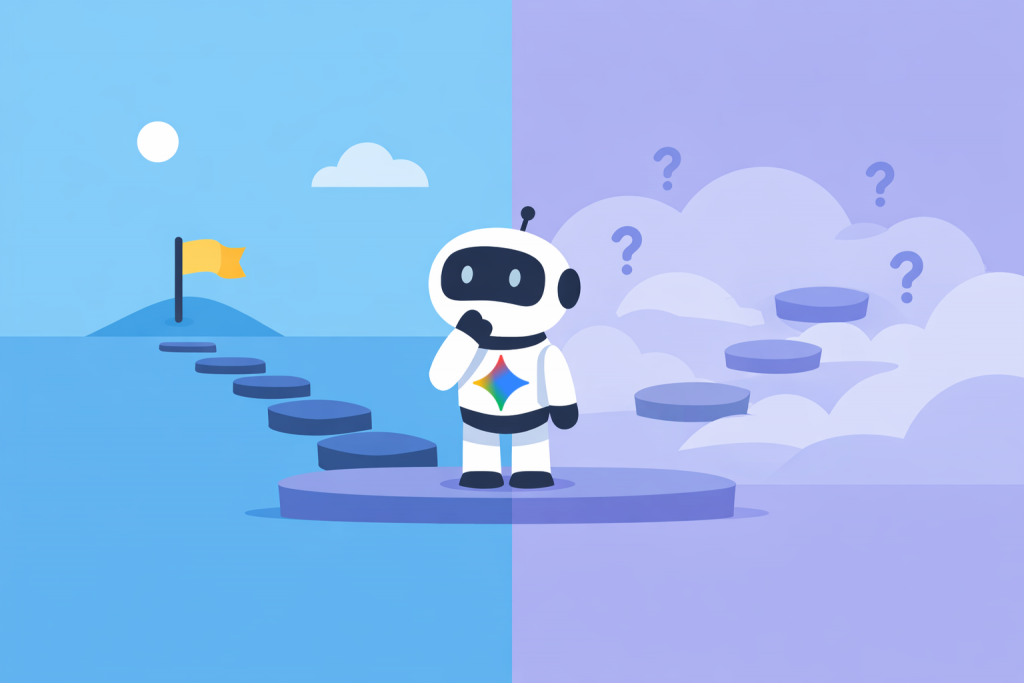
The robot stands on a platform between two paths: on the left are steps to a flag, on the right are steps in the fog with questions.
Solutions are not always on the surface

Until quite recently, digital systems felt comfortable only in environments with clear rules, predictable scenarios, and a limited set of input data. Algorithms efficiently followed instructions but became confused as soon as they moved beyond predefined patterns. Uncertainty—situations without a single correct answer, with incomplete information, or with conditions that change on the fly—was long considered a domain exclusive to human experience and intuition. Gradually, however, this balance is beginning to shift.

The End of the Era of Voice Assistants in the Traditional Sense

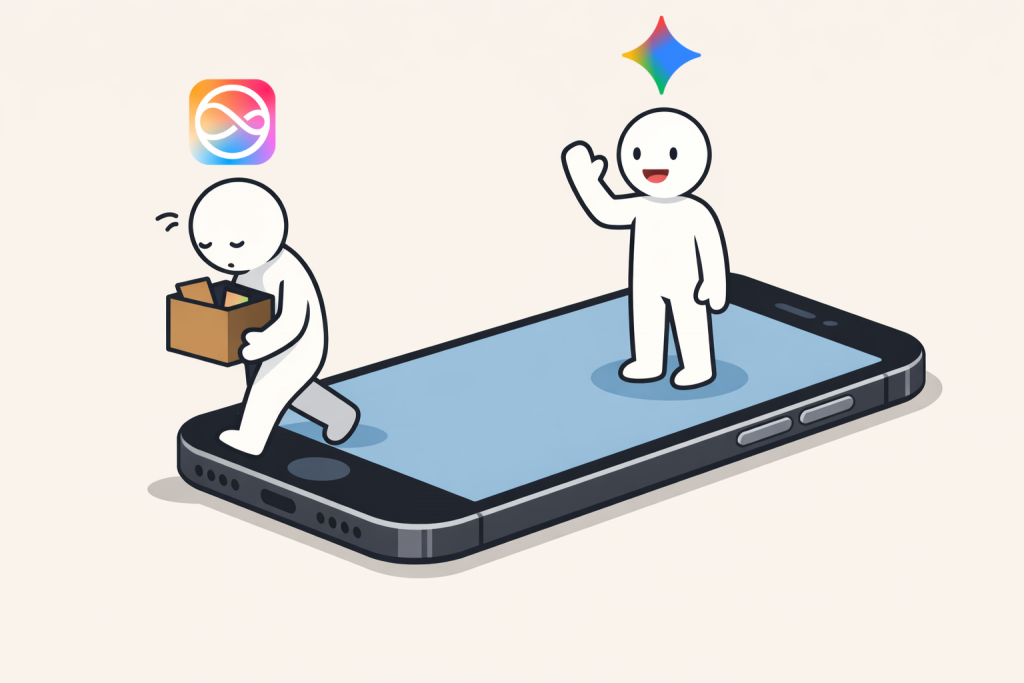
A person exits a smartphone with a data box under the icon of the old voice assistant, while another figure stands on the screen with a new AI symbol, representing modern artificial intelligence.
Changing approaches to human interaction with digital assistants

Apple has officially confirmed the integration of Google’s Gemini as the artificial intelligence powering the iPhone. In practice, this means that instead of continuing to develop its own voice assistant, Siri, the company is placing its bet on a third-party, next-generation AI model. For many users, this news may seem like just another ecosystem update, but in reality it points to a much deeper process — the end of the era of classic voice assistants as we have known them.

What the Release of Gemini 3.0 Means for the Future of AI

Glowing silhouette of a human profile next to the Gemini 3.0 logo and AI icon with microcircuits on an abstract network background.
A new stage in the development of models that expands the capabilities of artificial intelligence

The release of Gemini 3.0 has become one of the key events in the world of artificial intelligence. If previous versions were already considered groundbreaking, the third generation of the model demonstrates a qualitatively new level of capabilities, accuracy, and adaptability. It is not only about increasing computational power, but about fundamental changes in the interaction between humans and AI. Gemini 3.0 essentially sets new standards for what a modern intelligent tool should be: fast, universal, context-aware, and as close as possible to human logic. That is why the launch of the model became an important point of transformation for the entire digital ecosystem.