


Tag: Server load

What Is HTTP/2 Bomb and How to Protect a Server from a DoS Attack

The server receives a large number of malicious requests, causing the site in the browser to stop responding.
An attack that drains resources from within

Sometimes a website starts behaving as if it is under a heavy DDoS attack: pages open slowly, the API responds with delays, 502 or 503 errors appear in the logs, and web server processes suddenly start consuming much more memory. But at the same time, there is no huge stream of requests, the channel is not saturated, and the load may come from a small number of connections. This is how HTTP/2 Bomb works. It is a DoS attack on HTTP/2 – the protocol through which a website or application exchanges data with the server. The attacker sends a relatively small amount of data but forces the server to spend much more memory processing it. As a result, the web server or proxy may freeze, start using disk instead of RAM, restart processes, or stop serving regular users properly.

How dust affects server stability and why it is not a trivial matter

A server with accumulated dust, overheating, and a fan nearby is a sign of cooling problems.
Even small factors can affect the stability of work

When it comes to server stability, people usually mention uptime, DDoS protection, or code quality. However, in practice, hardware often fails because of quite down-to-earth things. Dust is not just a cosmetic defect of a room, but a real enemy of reliability that acts slowly, but systematically. Even complex equipment with multi-layer protection remains vulnerable to ordinary airborne suspension.

How lemons became a test for monobank’s servers

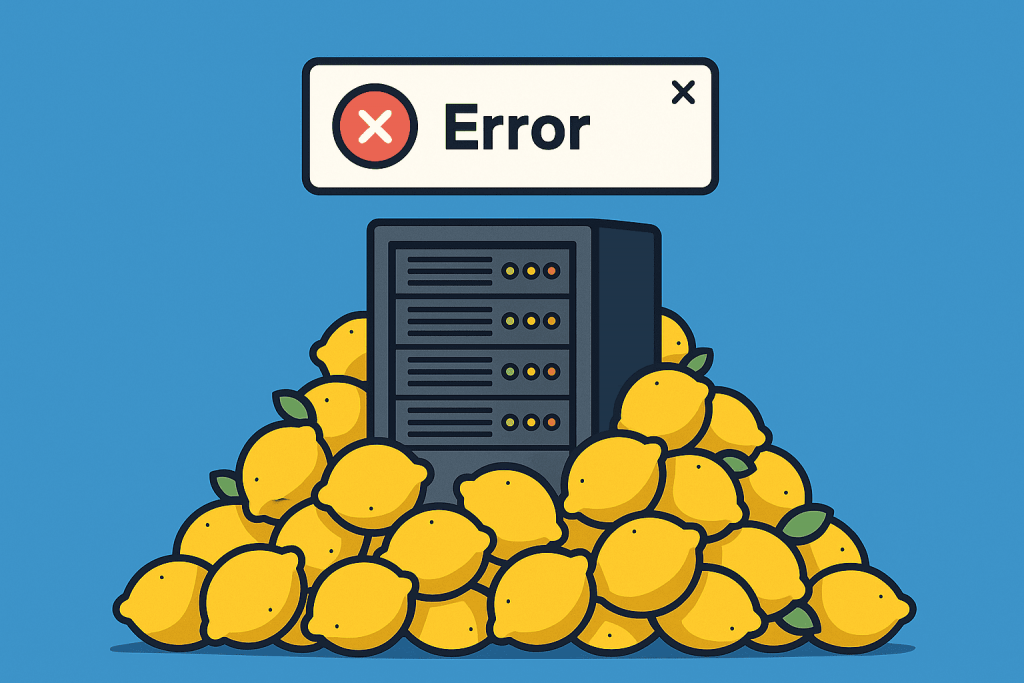
A server surrounded by a bunch of lemons with an error message hanging above it.
Monobank Lemon Case and Server Endurance Testing

In October 2025, Ukrainian fintech once again proved its ability to create nationwide events — even when it comes to ordinary lemons. Monobank announced a campaign to celebrate reaching 10 million customers and launched an in-app game: users had to find virtual lemons hidden across different sections. Find 10 — enter the draw for an iPhone 17; collect all 50 — get a chance to win ₴1 000 000. The biggest mystery was the “51st lemon” — a secret bonus that, according to the bank’s team, unlocked access to the main prize — a BMW 3 Series.